Learning the guitar is an exciting journey. The 6-string acoustic guitar is one of the most well known choices for fledglings and experienced players. Understanding guitar chords 6 string acoustic is fundamental for playing your favorite melodies and making music.
This guide will instruct you fundamental chords, tips, and how to play well known guitar chords 6 string acoustic tunes. It too centers on acoustic guitar chords for apprentices so anybody can begin playing quickly.

1. Understanding the 6-String Acoustic Guitar
A standard 6-string acoustic guitar has six strings tuned to E, A, D, G, B, and E. These strings are numbered from 6 (the thickest) to 1 (the thinnest).
6th string (E) – thickest, least pitch
Read Also: Top 5+ Best Guitar Players of All Time 2025
- 5th string (A)
- 4th string (D)
- 3rd string (G)
- 2nd string (B)
1st string (E) – most slender, most noteworthy pitch
Knowing string names and numbers makes a difference you examined chord charts and tabs. Appropriate tuning is vital. Continuously tune your guitar some time recently practicing.
2. Essential Guitar Chords for Beginners
For modern players, beginning with straightforward chords is key. These chords are the establishment of most songs.
Major Chords
C Major – Put your fingers on worries 1, 2, and 3 over strings 2, 4, and 5.
G Major – Fingers go on worries 2, 3, and 3 over strings 1, 5, and 6.
D Major – Put fingers on worries 2, 3, and 2 over strings 1, 2, and 3.
Minor Chords
A Minor – Fingers on worries 1, 2, 2 over strings 2, 3, and 4.
E Minor – Fingers on fusses 2 and 2 over strings 5 and 4.
D Minor – Fingers on fusses 1, 2, 3 over strings 1, 2, and 3.
Practicing these chords makes a difference fledglings play numerous acoustic guitar chords for fledglings songs.
3. How to Examined Guitar Chord Diagrams?
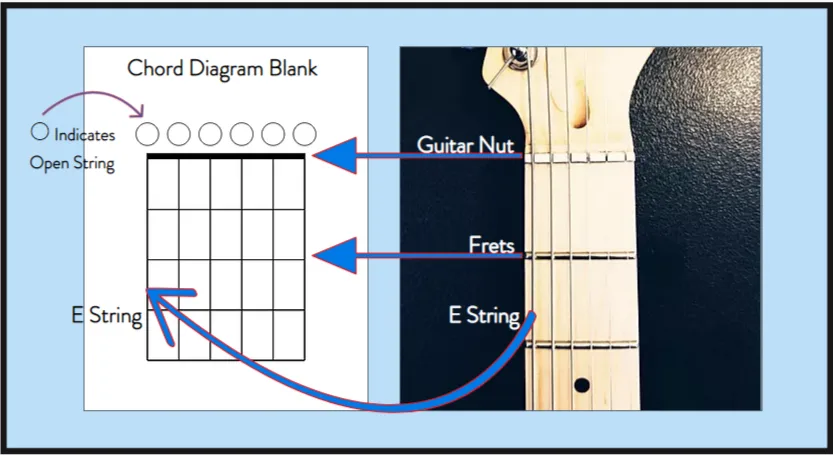
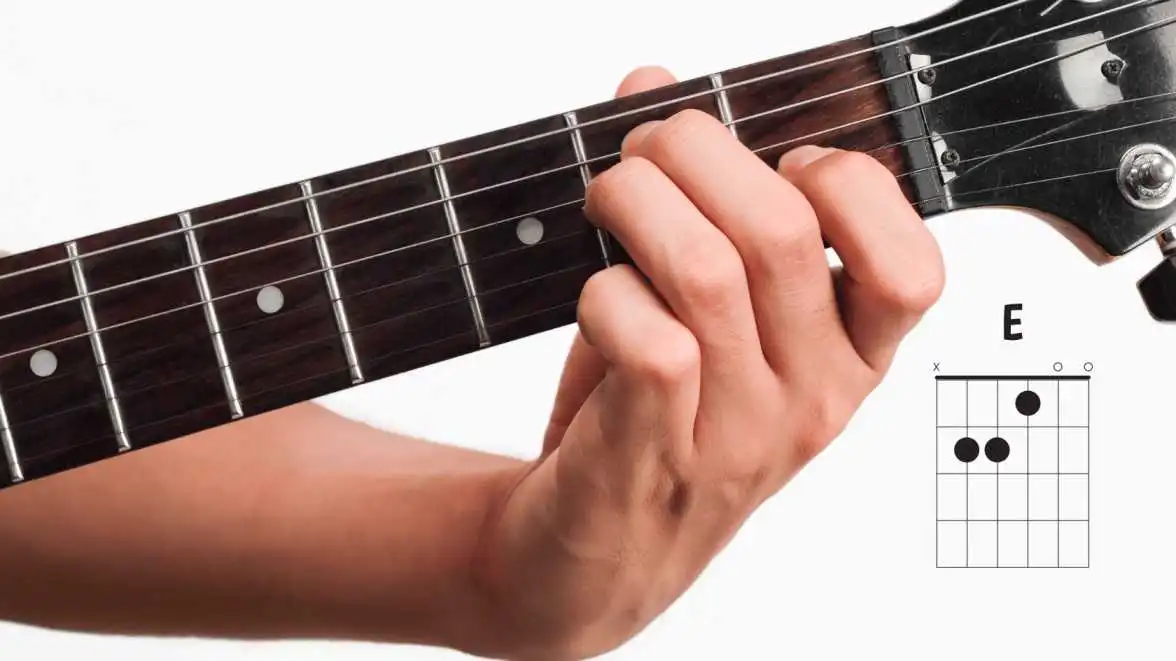
Chord charts are visual representations of finger placement.
Vertical lines = strings (6th string on the cleared out, 1st string on the right)
- Horizontal lines = frets
- Dots = where to put fingers
- O = open string
- X = do not play
Learning charts makes it simpler to play guitar chords 6 string acoustic melodies quickly.
4. Strumming Techniques
Strumming is critical for cadence and timing. Tenderfoots can begin with straightforward patterns:
- Downstrokes only
- Down-Up alternating
- Slow and unfaltering tempo
Use a choose or fingers. Test with delicate and solid strums. Great strumming makes acoustic guitar chords for fledglings sound musical.
5. Prevalent Guitar Chords 6 String Acoustic Songs

Once fundamental chords are learned, attempt playing melodies. Here are a few simple options:
- “Knockin’ on Heaven’s Door” – employments G, D, C, and Am
- “Horse with No Name” – employments E minor and D6add9
- “Wonderwall” – employments Em7, G, Dsus4, A7sus4
These melodies offer assistance fledglings hone chord moves and strumming. Playing genuine tunes keeps learning fun and energizes practice.
You Must Also Like: What Chord Is All Open Strings? To Know Complete Guide on Guitars
6. Tips for Practicing Chords
Practice Day by day – Brief, steady hone is superior than long, unpredictable sessions.
Focus on Clean Sound – Guarantee each string rings clearly without buzzing.
Switch Between Chords Gradually – Speed will make strides over time.
Use a Metronome – Makes a difference keep up beat whereas strumming.
Learn One Melody at a Time – Playing tunes like guitar chords 6 string acoustic melodies builds confidence.
7. Barre Chords and Progressed Chords
After acing open chords, tenderfoots can learn barre chords. Barre chords utilize one finger to press numerous strings.
F Major Barre – File finger presses all strings at the 1st fuss, other fingers frame an E Major shape.
B Minor Barre – File finger presses all strings at 2nd fuss, other fingers shape an A Minor shape.
Barre chords grow your run and permit you to play melodies in diverse keys. They are critical for progressing past acoustic guitar chords for beginners.
8. Finger Situation and Posture
Good procedure decreases strain and moves forward sound:
- Keep your thumb behind the neck for support
- Fingers ought to press strings close the frets
- Maintain straight pose, loose shoulders
- Keep wrists flexible
Proper pose makes a difference fledglings play longer without weakness. It moreover progresses clarity in guitar chords 6 string acoustic songs.
9. Learning Chord Progressions
Chord movements are combinations of chords played in grouping. Common movements include:
- I–V–vi–IV (C–G–Am–F) – utilized in numerous pop songs
- I–vi–IV–V (G–Em–C–D) – classic shake and ballads
- ii–V–I (Dm–G–C) – jazz and blues
Practicing movements moves forward smoothness and musicality. This step is fundamental for acing acoustic guitar chords for beginners.
10. Using Online Assets and Tutorials
Online lessons, video instructional exercises, and apps make learning simpler. Numerous websites give free chord charts and melody tutorials.
YouTube has step-by-step instructional exercises for guitar chords 6 string acoustic songs.
Mobile apps can track your advance and give intuitively lessons.
Online communities offer assistance apprentices get tips and motivation.
Consistent utilize of online assets quickens learning.
11. Common Botches to Avoid
Pressing as well difficult or as well softly on strings
Ignoring tuning some time recently practice
Switching chords as well rapidly without precision
Neglecting strumming rhythm
Avoiding tunes and practicing as it were chords
Correcting these botches early guarantees relentless advancement. Tenderfoots can accomplish extraordinary comes about by centering on acoustic guitar chords for apprentices and practicing daily.
12. Benefits of Learning 6-String Acoustic Guitar
Versatility – Can play numerous sorts like pop, shake, blues, and folk
Portability – Acoustic guitars do not require electricity
Foundation for Progressed Playing – Learning chords and strumming builds solid skills
Creativity – Permits songwriting and improvisation
Fun and Fulfilling – Playing favorite guitar chords 6 string acoustic tunes persuades learners
Learning the 6-string acoustic guitar is a long-term venture in ability and enjoyment.
13. Hone Schedule for Beginners
A organized schedule makes strides progress:
- Warm-up works out (5 minutes)
- Practice open chords (10–15 minutes)
- Strumming designs (10 minutes)
- Song hone utilizing learned chords (15–20 minutes)
- Cool-down with basic finger works out (5 minutes)
Following this schedule day by day builds muscle memory and confidence.
Conclusion
Learning guitar chords 6 string acoustic is a fulfilling encounter. Beginning with acoustic guitar chords for apprentices, practicing chord moves, strumming, and playing genuine tunes makes a difference tenderfoots advance quickly.
Popular guitar chords 6 string acoustic melodies make hone fun and locks in. With tolerance, consistency, and appropriate method, anybody can ace the 6-string acoustic guitar. Remember to:
- Start with essential chords
- Practice chord transitions
- Learn strumming patterns
- Play genuine songs
- Gradually investigate barre chords and progressions
Whether you need to play for fun or perform live, acing acoustic guitar chords for fledglings sets a solid establishment for a lifetime of music.