Ask ten guitarists who the best is. You will get eleven different answers. That is what makes this debate so interesting. There is no single correct answer. But there are names that keep coming up again and again.
This guide looks at the main candidates, what makes them special, and why this argument will never end. It is not about settling the debate. It is about understanding why the debate exists in the first place.
Who Is the Best Guitarist of All Time?
Before we name names, we need to agree on what we are measuring. Different people value different things.
Read Also: Top 3 Free Printable Guitar Chord Chart With Fingers 2026
Technical ability. Can they play fast, clean, and complex? Can they execute difficult techniques without mistakes?
Creativity. Did they invent something new? Did they change how the guitar is played?
Influence. How many other guitarists tried to copy them? How many songs did they inspire?
Feel. Does their playing move you? Do they make the guitar sing or scream?
Songwriting. Were they part of great songs, not just great solos?
Longevity. Did they stay relevant over decades?
Here is the problem. No one guitarist dominates all these categories. Hendrix had feel and influence but not the technical speed of later players. Vai has technique but not the cultural impact of Page. That is why the debate never ends.
The Main Candidates
Jimi Hendrix
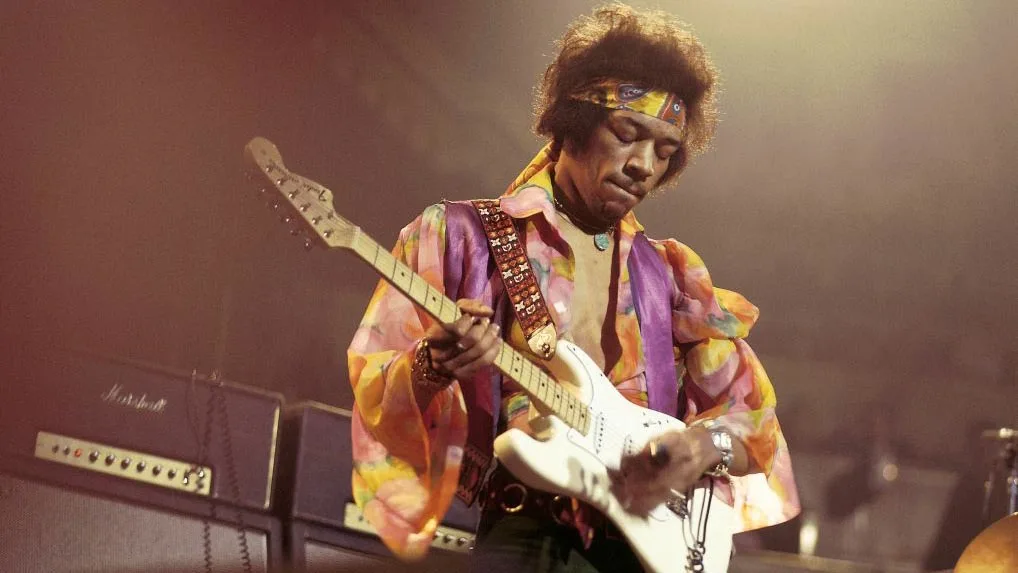
If you ask most guitarists who the greatest is, Hendrix is usually the first name out of their mouth. He changed what the electric guitar could do. He made it scream, cry, and talk.
You Must Also Like: The Best Routine to Get Better at Playing Guitar 2026
His Woodstock performance of "The Star-Spangled Banner" is one of the most famous guitar moments ever captured on film. He played with his teeth and behind his back. But it was not a gimmick. It was pure freedom.
Hendrix died at 27. His career was only seven years long. Yet his influence is massive. Almost every rock guitarist since 1970 lists him as an influence.
The case for him: He redefined the instrument. The sound, the effects, the showmanship—it all starts with Hendrix.
The case against him: His technical ability, while groundbreaking, was surpassed by later players. He did not have the classical or jazz training of some others.
Eric Clapton
Clapton has been called "God" by fans. He brought blues guitar to the mainstream. His work with John Mayall, Cream, and Derek and the Dominos set the standard for blues-rock guitar.
"Crossroads" and "Layla" are masterclasses in phrasing and tone. His playing is controlled, emotional, and always serves the song.
Clapton has stayed relevant for six decades. He has won 18 Grammys. He is the only three-time inductee into the Rock and Roll Hall of Fame.
The case for him: Longevity. Consistency. He has never sounded bad.
The case against him: His style is classic, but not revolutionary. He did not invent anything new. He perfected what others started.
Jimmy Page
Page built Led Zeppelin's sound with layers of guitar. He used a violin bow on the strings. He recorded backwards and used effects creatively. He was a producer as much as a player.
Songs like "Stairway to Heaven" and "Whole Lotta Love" have some of the most recognisable guitar parts ever written.
The case for him: He was a studio innovator and a great live performer. He created the sound of one of the biggest bands ever.
The case against him: His live playing was sometimes sloppy. He was not the fastest or most technical player.
Eddie Van Halen
Van Halen changed everything in 1978. His technique—two-hand tapping, harmonics, dive bombs—was unlike anything before. "Eruption" is still a benchmark for guitarists.
He also designed his own guitar and amp. He was not just a player. He was an inventor.
The case for him: He invented a new style that thousands copied.
The case against him: His influence is mostly on rock and metal. Outside those genres, his impact is limited.
Stevie Ray Vaughan
Vaughan brought blues guitar back to the mainstream in the 1980s. His playing was fierce, fast, and deeply emotional. His tone was fat and powerful.
"Texas Flood" and "Little Wing" show his range. He could play with the restraint of a classic bluesman or the fire of a rock star.
The case for him: He combined technical ability with deep feeling. His live shows were incredible.
The case against him: His career was short. He died at 35. His influence is mostly within blues and rock.
John McLaughlin
If you want technical mastery, look to McLaughlin. His work with Miles Davis and the Mahavishnu Orchestra pushed the guitar into new territory. He played fast, complex, and in odd time signatures.
The case for him: He has one of the most advanced techniques of any guitarist.
The case against him: His music is not mainstream. He does not have the cultural impact of rock players.
Tommy Emmanuel
Emmanuel is a fingerstyle virtuoso. He makes the guitar sound like a full band—bass, rhythm, and melody all at once. He is often called the greatest acoustic guitarist alive. His cover of "Classical Gas" is a masterclass.
The case for him: His technical ability is staggering. He plays live and never stops.
The case against him: He is not a household name. His style is niche.
Joe Satriani and Steve Vai
Satriani taught Vai. Both are technical masters. Both have pushed the guitar's boundaries.
"Surfing with the Alien" and "For the Love of God" are iconic instrumental pieces.
The case for them: They have the highest level of technical ability.
The case against them: Their music is instrumental, which limits mass appeal. They have not changed the guitar fundamentally.
What the Lists Say?
Guitar World and Rolling Stone have published lists over the years. The names at the top are usually Hendrix, Clapton, and Page.
But the consensus is shifting. More modern lists include players like John Mayer, Derek Trucks, and Tosin Abasi. The criteria are broadening.
The Final Thoughts
There is no number 1. There cannot be. Music is subjective.
If you value influence, Hendrix is number 1. If you value technique, it is Satriani or Vai. If you value songwriting, it is Clapton or Page. If you value feel, it is Vaughan or Hendrix.
The debate itself is the point. It gets people listening, learning, and arguing about music. That is a good thing.
If someone tells you who the best guitarist of all time is with certainty, they are either selling something or they have not listened to enough guitarists. The answer is personal. It depends on what you care about.
Listen to all of them. Decide for yourself. That is more honest than any list.
FAQ's- About Best Guitarists of All Time
Who is the number 1 guitarist of all time according to critics?
Jimi Hendrix is most often ranked number 1 in magazine lists. Rolling Stone ranked Hendrix number 1 in 2011. Guitar World has ranked him number 1 multiple times.
Who is the best guitarist alive today?
There is no single answer. Tommy Emmanuel is often called the greatest acoustic guitarist alive. John Mayer, Derek Trucks, and Tosin Abasi are frequently mentioned for electric guitar.
Who has the best guitar solo of all time?
"Stairway to Heaven" and "Free Bird" are frequently cited. But "Eruption," "Comfortably Numb," and "Little Wing" are also in the conversation.
Which guitarist influenced the most people?
Jimi Hendrix and Eric Clapton are often cited as the most influential. Almost every guitarist since the 1960s has been influenced by one or both.
Is technical ability the most important factor?
No. Feel, creativity, and influence matter just as much. Some of the most beloved guitarists are not the fastest or most complex players.