
Why do my guitar strings buzz? I remember the first time I heard that ugly buzzing sound from my guitar. I had just bought a new acoustic. It sounded beautiful in the store. But at home, every note on the low E string had a nasty rattle.
I was frustrated. I thought I had bought a dud. The truth was simpler. My guitar just needed a setup.
Guitar string buzz is one of the most common problems guitarists face. It happens to beginners and professionals alike. It can ruin your tone and make playing feel awful.
What Actually Is Guitar String Buzz?

String buzz is that unwanted rattling or sizzling sound you hear when a string vibrates against a fret . It usually happens when the string's vibration touches a fret that is higher than the one you are pressing down.
Think of it like this: the string is swinging in an arc. If it hits something on its way, you get buzz.
Read Also: The New Gold Standard: 2026 Hybrid Digital Piano Reviews And MIDI 2.0 Integration
Is all buzz bad? Not necessarily. A little fret buzz is normal on most guitars . Some players even like a tiny bit of buzz. It adds a percussive edge to their tone. But if the buzz is loud enough to hear through your amp or it kills the note's sustain, it is a problem.
The Most Common Causes (And Why It's Probably Not Your Guitar's Fault)
Many players immediately think their guitar is broken. Usually, it is not. Here are the most common culprits.
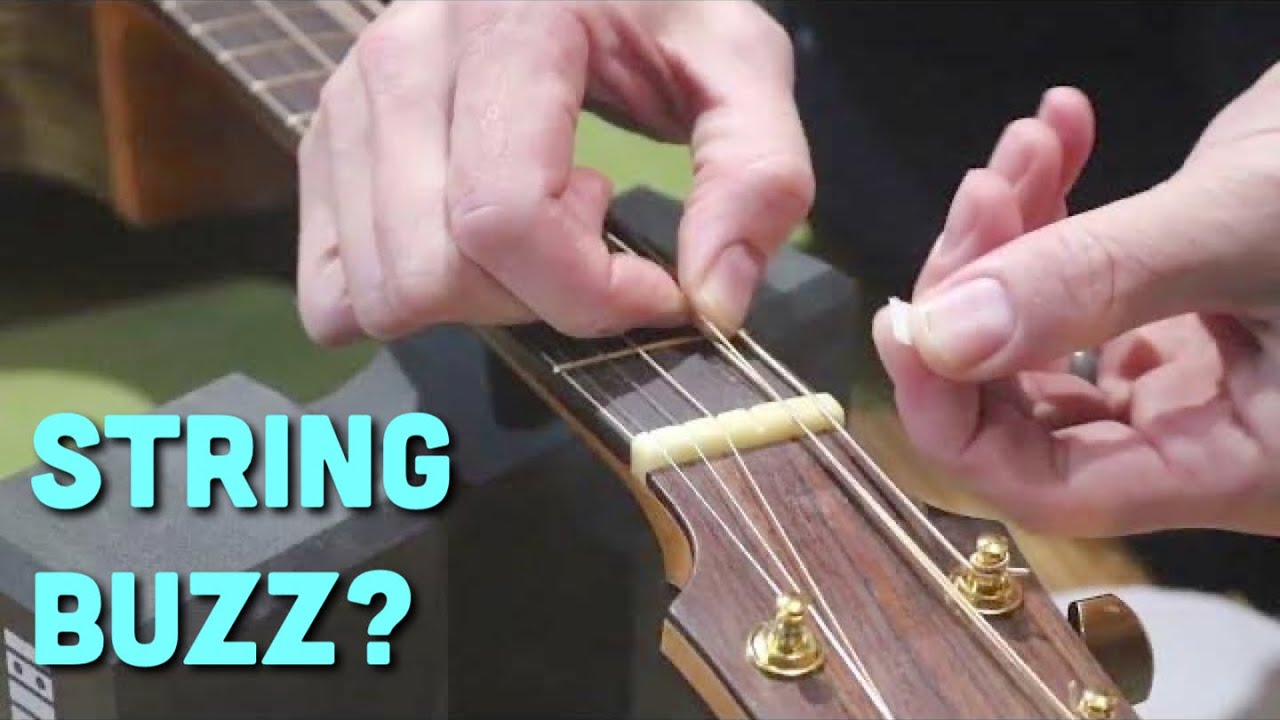
1. The Setup Is Off
This is the number one reason for why do my guitar strings buzz. It is almost always a setup issue . The guitar's neck, bridge, and nut need to be in balance.
The neck might be too straight or too curved. Guitars need a slight forward bow (called "relief") in the neck. If the neck is perfectly straight or has a back bow, the strings will buzz against the frets .
The action might be too low. Action is the height of the strings above the frets. If the strings are too close to the fretboard, they will buzz .
The nut might be cut too low. The nut slots support the strings at the headstock. If they are filed too deep, the strings will buzz against the first fret .
The saddle might be too low. The saddle is the piece on the bridge that holds the strings. If it is too low, the strings will buzz against higher frets .
2. Your Playing Technique
Sometimes the problem is not the guitar at all. A heavy pick attack can cause buzz . If you hit the strings too hard, they will vibrate in a wider arc and hit the frets.
What to do: Try playing with a lighter touch. See if the buzz disappears. If it does, you need to adjust your technique.
3. Old or Wrong Strings
Old strings lose their tension. They become floppy and vibrate more wildly. This can cause buzz . The wrong string gauge can also cause problems. Lighter strings vibrate more and can buzz more easily .
4. Uneven or Worn Frets
This is more common on older guitars. Frets wear down over time. If a fret is uneven or has a groove worn into it, the string will buzz . This is the most expensive problem to fix. It often requires a fret leveling or even a refret .
5. Loose Hardware
Sometimes, the buzz is not the string hitting a fret. It could be a loose tuning peg, a rattling pickup spring, or a loose brace inside an acoustic guitar . This is a common cause of buzz on the high E string buzz acoustic guitar.
How To Fix Buzzing Guitar Strings?
Most fixes are cheap and easy. You can do many of them yourself. But some require a professional.
You Must Also Like: How to Tune a Guitar With a Guitar Tuner?
DIY Fixes You Can Try at Home
1. Check the Setup
-
Check the neck relief. Press the low E string down at the first and last fret. Look at the gap at the 12th fret. It should be about the thickness of a business card . If it is too straight or too bowed, you need to adjust the truss rod.
-
Adjust the action. If the action is too low, raise the saddle. This involves adjusting the bridge screws or adding a shim to the saddle .
2. Change Your Strings
-
If your strings are old or the wrong gauge, replace them. This is a cheap fix .
3. Check Your Technique
-
Try playing with a lighter touch. If the buzz goes away, you need to adjust your picking style .
4. Tighten Loose Hardware
-
Check all the screws on your guitar. Tighten the tuning pegs, the pickguard, and the output jack. Sometimes the buzz is coming from a loose part .
When To Take It To A Pro?
Some problems require a skilled luthier.
-
If you need a truss rod adjustment and you are not confident doing it yourself, take it to a pro. You can damage your guitar if you overtighten the truss rod.
-
If you have uneven or worn frets. Leveling or replacing frets requires special tools and expertise.
-
If you have a high fret. A raised fret can cause open string buzz electric guitar. A luthier can file down the high spot.
Quick Troubleshooting Guide
| Problem | Possible Cause | Solution |
|---|---|---|
| Buzz on open strings | Nut too low | Replace or shim the nut |
| Buzz on fretted notes | Action too low or neck bow | Raise action or adjust truss rod |
| Buzz only on one fret | Worn or high fret | Fret leveling by a luthier |
| Buzz on high E string | Loose hardware or string | Tighten screws or replace string |
| Buzz when playing hard | Heavy pick attack | Play with a lighter touch |
The Final Thoughts
String buzz is a solvable problem. Do not panic. It is not the end of the world. It is a sign that your guitar needs attention. Most of the time, it is an easy fix. Start with the simple checks: your technique, your strings, and your guitar's overall setup.
If you are not sure, take it to a professional. A good setup costs about $50-$100 and can transform how your guitar plays and sounds. It is worth the money.