
You just nailed a perfect chord shape. You strum. It sounds terrible. There is a dull, muffled note in the middle. Or worse, an open string is ringing out when it should be silent. It is frustrating.
Every guitarist has been there. You are not alone. The good news is that you are already doing half the work. You are muting strings accidentally. Now you just need to do it on purpose.
Learning how to mute unwanted strings while playing chords is the secret to clean playing. It is what separates beginners from pros. It makes your chords sound crisp. It stops the "mush" that happens when unwanted strings while playing guitar chords ring out.
How to Mute Unwanted Strings While Playing Chords?
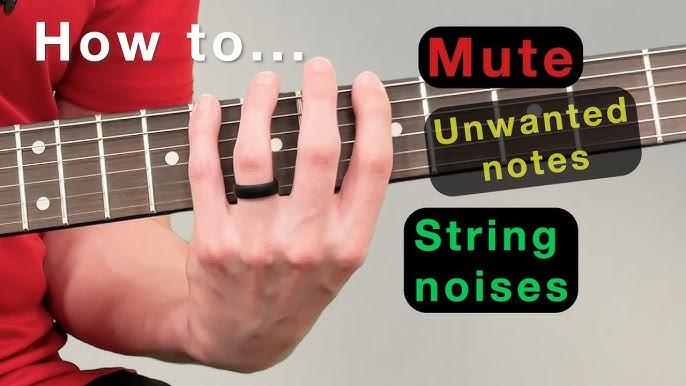
Most players see muting as a problem to avoid. They think, "I need to stop fingers keep touching other strings guitar." That is the wrong approach.
Read Also: How to Play Basic Ukulele String Chords in Under 10 Minutes?
You do not want to stop muting. You want to control it. A slight touch is all you need. Touch a string lightly, and it stops vibrating. You want those muted notes to happen on purpose.
Muting is not a limitation. It is a tool. It adds space between notes. It makes your rhythms pop. It is as important as making the strings ring.
Muting with Your Fretting Hand
Your fretting hand has a lot more to do than just press down notes. It is your primary muting tool. You can use several techniques.
The Finger Overhang
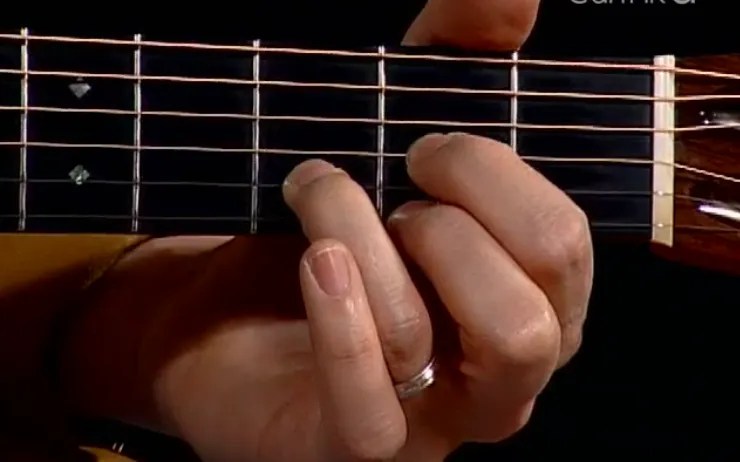
This is the easiest method. You just let your finger lay slightly flat. The tip of your finger touches the string next to the one you are fretting. That extra string will not ring .
Look at a simple power chord. Your index finger is on the A string. The tip of that finger touches the low E string. It mutes it. Your ring finger touches the G string. It mutes that one too .
The Thumb Wraparound
You cannot always mute the low E string with your index finger. Sometimes you need help. That is where your thumb comes in.
Bring your thumb over the top of the neck. Rest it lightly on the low E string. It will stop it from sounding . It feels awkward at first. It becomes natural with practice.
The Lazy Barre
This is for muting the thin strings. You keep your index finger flat. It acts like a lazy barre. It rests on the high E and B strings. It does not press them all the way down. It just touches them .
You use this for a chord like Csus4. You need the top E strings to stay silent. Your index finger mutes them .
Muting with Your Strumming Hand
Your fretting hand is not alone. Your strumming hand helps too.
The All-Stop Mute
This is a simple movement. You just twist your wrist. The edge of your palm touches the strings. It stops everything. It is great if you hit a wrong note. It resets your strings. It is also used in rock and reggae. You can get a staccato, choppy sound.
The Palm Mute
This is different. You rest your palm on the strings near the bridge. It does not stop the sound completely. It makes it thumpy and percussive.
You Must Also Like: Minimalist Bass Rig Rundown: Ditching the Cab for the Ultimate Small Gig Setup
Blues players love this. It gives them a heavier, more driving sound.
Common Problems and Solutions
You are still struggling. Let us look at some fixes.
Problem: Your chord sounds muted.
Solution: Your finger is too flat. You are muting the string you want to play. Stand your finger up. Use the tip, not the pad.
Problem: The low E string keeps ringing.
Solution: Use your thumb. Or use your index finger. Make sure one of them is touching it.
Problem: You hear a buzz or a dead note.
Solution: You are pressing too hard. You are pulling the string. Press just enough to get a clean sound.
Problem: The notes bleed into each other.
Solution: You are not muting the silent strings. A string that is not meant to ring must be touched. Find a free finger and lay it on that string.
How to Practice Muting?
This skill takes months to master. Do not get frustrated. Make it a part of your practice routine. Here are some ways to do it.
-
Start with power chords: Focus on the index finger overhang. Then the thumb muting. Focus on getting just the two notes to ring.
-
Move to open chords: Take a chord like C. Mute the low E with your thumb. Mute the high E with the side of your index finger. Strum all six strings. You should only hear the notes of the chord.
-
Practice chord changes: Make a jump between two chords. Your hand will naturally mute the strings during the change . Let it happen. Do not try to avoid it.
Muting is about awareness. You need to know where your hand is. You need to know what it is touching. Once you control it, your playing will be clean and professional.
Frequently Asked Questions
Q1: Why do my fingers keep touching other strings on guitar?
This is usually due to improper finger positioning. Your fingers might be too flat. Try to press down with the very tips of your fingers, standing them up perpendicular to the fretboard.
Q2: How can I mute unwanted strings while playing chords?
You can use your fretting hand to gently touch the strings you don't want to ring out. You can also use the edge of your picking hand to rest on the strings near the bridge.
Q3: What is the easiest way to mute strings on guitar?
A simple finger overhang is very easy. When you fret a note, let the tip of your finger touch the string next to it. That string will be muted.
Q4: How can I stop my open strings from ringing out when I play chords?
You must physically touch the open string with a free finger from your fretting hand. Rest it lightly on the string. It will silence the note .
Q5: Should I use my thumb to mute the low E string?
Yes, the thumb wraparound technique is very effective. You wrap your thumb over the top of the neck and rest it on the low E string. It is a very common technique.