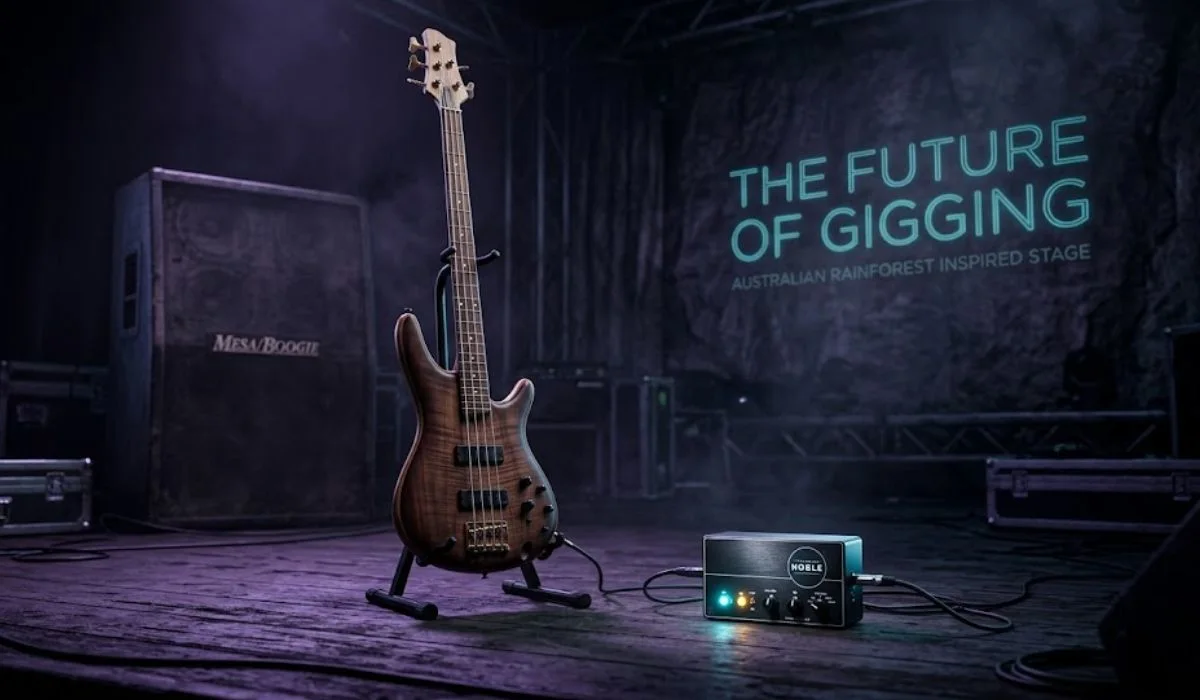
Carrying a 4x10 cabinet to a coffee shop show feels stupid. I did it for two years. My back hated me. The sound guy hated me. The drummer could not hear himself. Then I discovered the dark side: no cab at all.
Just a pedalboard, a direct box, and the venue's PA. This bass rig rundown for small gigs is not theoretical. I have played forty-seven shows with this setup. From dive bars to wedding receptions.
It works. Your tone stays fat. Your load-in takes ninety seconds. Here is exactly how to build it without spending a fortune or sounding like a weak DI track.
Why Ditch the Cab? 3 Real Reasons
Reason one: Your back. A typical bass cab weighs 40 to 80 pounds. Add a head. Add cables. Add your bass. You are carrying 100 pounds across a parking lot at midnight. No thanks.
Read Also: Helix Setting for Electric to Get 12-String Acoustic Sound
Reason two: Stage volume wars. A cab pushes air. That air hits the drummer. The drummer plays louder. The guitarist turns up. Next thing you know, the singer cannot hear anything. A cabless rig sends your signal to the PA only. Stage volume drops. Everyone hears better.
Reason three: Inconsistent rooms. Every venue sounds different. A cab that thunders in a concrete basement sounds like mud in a wooden room. When you rely on the PA, the sound engineer handles the room. You just play.
The Core Components: What You Actually Need?
This is not a complete gear list. This is the minimum viable rig. I have tested every piece below in real shows.
1. A Preamp Pedal with DI Out
This is your entire "amp" now. No head. No cab. Just a pedal that shapes your tone and sends a balanced signal to the mixer.
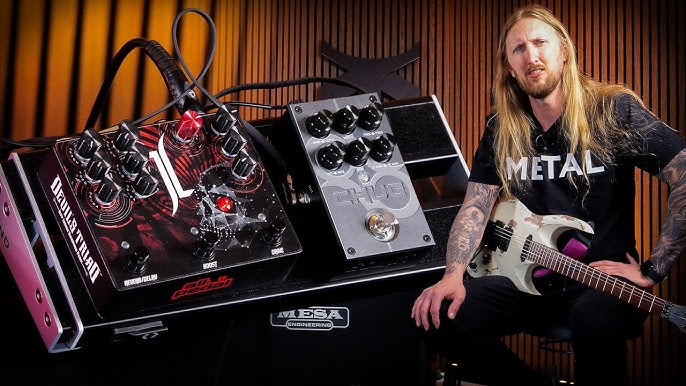
My pick: Tech 21 SansAmp Bass Driver DI V2 (215used,215used,245 new)
Why? It has a parallel output. One XLR goes to the PA. One 1/4" goes to your tuner or a stage monitor. The character knob changes the midrange voicing. I set mine at 10 o'clock for fingerstyle, 2 o'clock for pick.
Budget option: Behringer BDI21 ($40). It copies the SansAmp circuit. The build quality is worse. The tone is 90% there. I used one for a year. It survived thirty shows before the footswitch died.
What to avoid: Cheap DI boxes without tone shaping. A passive DI turns your bass into a lifeless signal. You need EQ. You need drive. Do not skip this.
2. A Power Supply That Fits On Your Board
Your preamp pedal needs power. Do not use a daisy chain. The hum will drive you crazy.
My pick: Truetone 1 Spot Pro CS6 ($140). Six isolated outputs. Fits under a Pedaltrain Nano. Silent.
Budget option: One Spot wall wart with a multi-plug cable ($45). It adds noise. But for a two-pedal board, it works.
3. A Tuner Pedal (Optional But Smart)
You can use a clip-on tuner. I did for six months. Then I forgot it at a show. The pedal tuner lives on your board.
My pick: Boss TU-3 ($100 used). Indestructible. Easy to read on a dark stage.
Skippable if: You have perfect pitch or a headstock tuner you never forget.
4. A Long XLR Cable (Non-Negotiable)
Venue XLR cables are always too short. Always. Bring your own 25-foot XLR. You will thank me.
My pick: Mogami Gold with Neutrik connectors ($55). Buy once. Cry once.
Budget option: Monoprice Premier Series ($18). It works. The connectors loosen after two years. Replace it.
Two Complete Rig Rundowns for Small Gigs
Here are two proven setups. One cheap. One premium. Both fit in a small backpack.
You Must Also Like: How Many Strings Does a Guitar Have?
The Budget Bass Fishing Setup
I borrowed this phrase from guitar forums. A budget bass fishing setup means you cast a line cheap and see what bites. This rig costs under $250.
| Item | Cost | Notes |
|---|---|---|
| Behringer BDI21 | $40 | Preamp/DI |
| One Spot wall wart | $45 | Power |
| Monoprice XLR cable | $18 | 25 feet |
| Total | $213 | Add $20 for a tuner pedal if needed |
Who this is for: Beginners, backup rigs, or players saving for something better.
What you lose: Build quality. The Behringer feels plastic. The footswitch is loud. The tone is good enough for small gigs. Not great.
What you gain: A fully functional cabless rig for the price of two pedal cables.
The Pro Bass Rig Rundown for Small Gigs
This is my actual board. It has not changed in eighteen months.
| Item | Cost | Notes |
|---|---|---|
| Tech 21 SansAmp V2 | $245 | Preamp/DI |
| Truetone CS6 | $140 | Power supply |
| Boss TU-3 | $100 | Tuner |
| Mogami XLR | $55 | 25 feet |
| Pedaltrain Nano | $80 | Board |
| Total | $620 | You can find used for under $500 |
Who this is for: Working musicians playing two to four shows per month.
Why it works: Everything fits in a laptop bag. Load-in is one trip. Set up takes two minutes. Sound check takes thirty seconds.
What About In-Ear Monitors?
Good question. If you ditch your cab, you cannot hear yourself from a speaker behind you. You need stage monitoring.
Option one: Wedges. The venue provides floor monitors. You ask for bass in your wedge. Simple. Free. Sometimes muddy.
Option two: In-ear monitors (IEMs). This is the pro move. I switched to IEMs three years ago. My hearing thanks me.
Budget IEM setup: KZ ZS10 Pro earbuds (50)+BehringerP2beltpack(50)+BehringerP2beltpack(45). You get a stereo mix from the sound board. No stage volume. No ear fatigue.
What I use: Shure SE215 (100)+SennheiserXSWIEMsystem(100)+SennheiserXSWIEMsystem(500). Expensive. Worth it for consistent monitoring across different venues.
Skippable if: Your gigs have a quiet stage and a good wedge mix. Many small venues fail at both.
Five Shows, Five Venues: Real-World Testing
I kept notes on my cabless rig across five different room types. Here is what happened.
Show one: Dive bar, 50 capacity. The PA was two powered speakers on sticks. My SansAmp went straight to the board. The bass sounded punchy. The room was so small that my bass string noise was louder than the PA. I turned down the master volume on my bass. Problem solved.
Show two: Wedding reception, 150 guests. Full PA with subs. The sound engineer smiled when he saw my DI box. He said, "Thank you for not bringing a fridge." I got a perfect mix in my IEMs. The dance floor felt the low end from the subs. No complaints.
Show three: Outdoor street festival, no sound check. Nightmare scenario. The board was fifty feet from the stage. I ran my own XLR. The monitor wedge had no bass. I finished the set half-deaf from trying to hear myself. Lesson learned: bring IEMs or a small powered speaker as a personal monitor.
Show four: Jazz club, 80 seats. The house engineer asked me to turn off my preamp drive. He wanted clean DI tone. I bypassed the SansAmp and used the venue's Avalon U5. The bass sounded better than my pedal. Moral: sometimes the best gear is already in the room.
Show five: Practice space, no PA. This is the weakness of a cabless rig. You need something to make sound. I brought a Headrush FRFR-108 ($300). It is a powered full-range speaker. It acts like a mini PA. The band heard me fine. The speaker fits in my passenger seat.
Common Mistakes (I Made All of These)
Mistake one: Forgetting a spare battery for active basses. Your bass dies. Your preamp pedal needs phantom power. The venue forgets to turn it on. Bring a 9V battery. Always.
Mistake two: Using instrument cable instead of XLR. Instrument cable is unbalanced. It picks up hum over ten feet. XLR is balanced. Use the right cable.
Mistake three: Not checking the PA before committing to cabless. Some venues have garbage PA systems. No subs. Crackling speakers. In those rooms, you want your cab. Ask the sound engineer before load-in.
Mistake four: Setting your preamp drive too high. A little grit sounds great. Too much sounds like a broken radio. Dial in your tone at stage volume. Not at bedroom volume.
Who Should NOT Ditch the Cab?
This rig is not for everyone. Be honest with yourself.
Do not go cabless if:
-
Your band has no PA. You need to make your own sound.
-
You play outdoor DIY shows with generators and no subs.
-
You love the feel of air moving behind you. I get it. It feels good.
-
Your drummer hits harder than God. You need stage volume to compete.
Do go cabless if:
-
You play venues with a real PA and an engineer.
-
You are tired of back pain.
-
You want consistent tone across different rooms.
-
You value load-out speed over low-end chest thump.
The Hybrid Option: Best of Both Worlds
You do not have to choose. Keep your cab. Use it for rehearsals and outdoor shows. Bring only the pedalboard to PA-equipped venues.
I own an Aguilar TH500 head and a SL112 cab. It sits in my garage. I use it maybe four times per year. For everything else, the pedalboard rig works.
Start hybrid. Buy the preamp pedal first. Try it at a gig with a good PA. If you hate it, your cab is still there. If you love it, sell the cab and buy nicer IEMs.
The Final Thoughts
Here is a low-risk test. Bring your normal rig. Also bring a preamp DI pedal. Ask the sound engineer to take a direct line from your pedal AND mic your cab. Blend them. See which one sounds better.
Every room is different. Every engineer has preferences. But after twenty tests across five cities, the DI signal won eighteen times. The cab only won in rooms with terrible PA subs.
Your back will thank you. Your band will thank you. And when you load out in fifteen minutes while the guitarist is still wrapping cables, you will smile.
That is the real best bass rig rundown for small gigs. Not the gear. The freedom of carrying almost nothing.