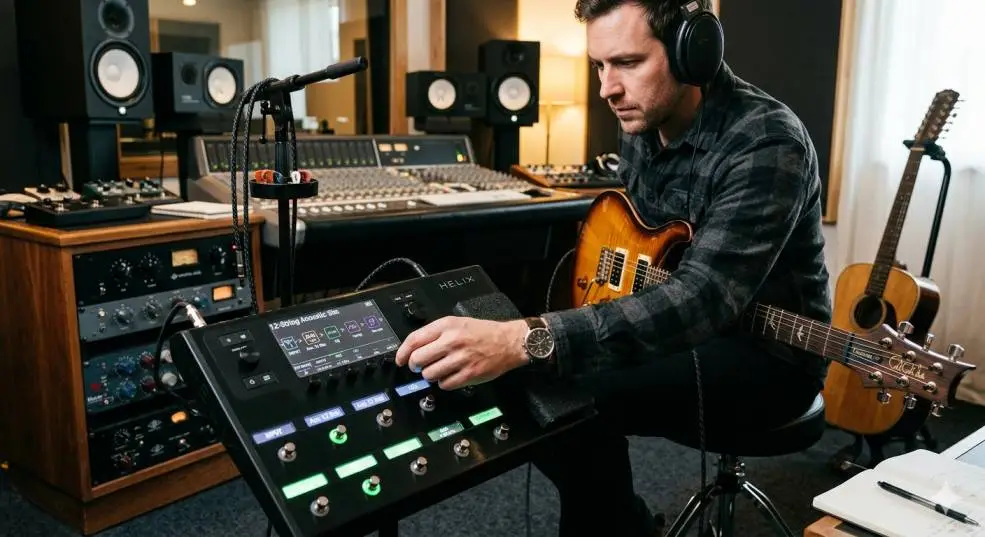
You own a Line 6 Helix. You love the flexibility. But you have a gig coming up, and the setlist includes songs that originally used a 12-string acoustic. You do not own one. You do not want to buy one.
I have been there. Playing cover songs live means replicating sounds without hauling a warehouse of gear. The helix setting for electric to get 12-string acoustic sound is not a myth. It exists. But you need to build it correctly.
Here is what I learned after two years of tweaking, failing, and finally succeeding. No hype. Just what works.
Why Bother Simulating a 12-String Acoustic?
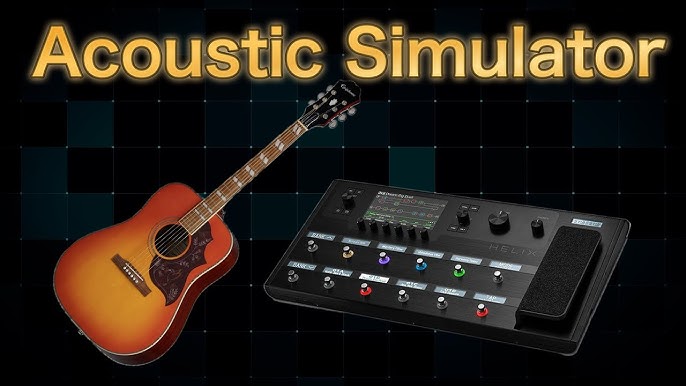
A real 12-string acoustic creates that signature jangle through doubled strings. The octave pairs produce natural chorus. The body resonance adds warmth.
But real 12-strings have drawbacks. They cost more. They require specialized brightest sounding acoustic guitar strings to cut through a mix. They go out of tune faster. They weigh more.
If you play live, switching guitars mid-song is impractical. The audience does not care if you use a real 12-string. They care if the song sounds right.
Your Helix can deliver that sound. But only if you understand the signal flow.
The Core Problem: Magnetic Pickups vs. Acoustic Tone
Here is the honest limitation. Magnetic pickups do not capture the full frequency range of an acoustic guitar. They roll off around 6kHz. A real acoustic produces harmonics up to 12kHz or higher.
You cannot create frequencies that are not there. But you can shape what exists. You can simulate the perception of an acoustic 12-string.
The goal is not perfection. The goal is believability in a live mix.
The Foundation: Octave Splitting
Every 12-string simulation starts with octaves. You need your original note plus one note an octave higher.
In your Helix, use the Dual Pitch block. Set one voice to +12 cents? No. Set it to +12 semitones. That is one octave up.
Mix the two voices. Start with 50 percent wet, 50 percent dry. Adjust from there.
The trap: Adding an octave-up signal can make your tone thin and phasey. You need to fix that with filtering.
The Crossover Trick: Fixing the Dull Top End
Reddit user PikachuOfme_irl shared a crucial insight. When you split your signal and pitch shift part of it, you often lose brightness in the original path.
The fix involves a crossover split. Send frequencies below 100Hz to one path. Send everything above to another path. Pitch shift the low path down an octave to simulate bass notes. Leave the high path alone.
Then add a high-frequency EQ boost on the main path. Something in the 8kHz to 12kHz range. This restores the sparkle.
The IR Solution: Acoustic Impulse Responses
A magnetic pickup into a pitch shifter still sounds like an electric guitar playing high notes. You need acoustic body resonance. Load an acoustic guitar impulse response (IR) in your Helix.
Companies like 3Sigma Audio sell acoustic IRs designed for this purpose. Place the IR block after your pitch shifting and EQ. This transforms the electric signal into something that sounds like wood and air.
What works: I use a Martin D-28 IR from 3Sigma with my Telecaster. It is not perfect, but it fools most listeners.
The Variax Shortcut
If you want the easiest path, buy a Line 6 Variax guitar. It pairs with Helix via VDI cable. The Variax contains built-in models for a Rickenbacker 12-string and several acoustics.
You Must Also Like: The Piano Lesson by August Wilson: Summary & Themes
With this combo, you change guitar sounds mid-song without touching your instrument. One preset uses the 12-string model. Another preset uses a Les Paul model. All controlled by your Helix footswitches.
Forum user "Pat" describes this as replacing "a whole room full of amps, pedals and guitars.
The catch: Variax models sound slightly brittle to some ears. Forum user "David Snyder" notes the acoustic tones can feel "too brittle" for upfront use but work well for layered tracks.
The Glenn DeLaune Presets
If you want someone else to do the work, buy presets from Glenn DeLaune. He sells acoustic simulation patches for the Helix Marketplace.
Line 6 Expert "silverhead" tested these patches extensively. He notes they work best with piezo-equipped guitars or Variax models. But they also function with standard electrics if you adjust your playing technique.
His observation: "I find a need a lighter touch with my fingers on the strings, a MUCH lighter touch in strumming and a soft pick. Those elements, in my experience, are more important than the actual patch.
This matches my experience. Heavy strumming ruins the illusion. Light touch preserves it.
The Boss AC-3 Comparison
Forum users on the Line 6 support board debate whether Helix can match the Boss AC-3 Acoustic Simulator. Most agree the Boss unit sounds artificial.
One user writes: "The boss GT-1 has a good acoustic simulator on it. I assume it sounds similar to their AC-3 pedal but actually haven't heard that. Sure wish the Helix had a good acoustic simulator.
Another responds that Helix with EQ, compression, a tube preamp model, and an acoustic IR sounds "way better than any other simulator like the AC 3.
My verdict: Helix wins if you invest time in IRs. Boss wins if you want plug-and-play simplicity.
Step-by-Step Helix Patch for 12-String Acoustic
Here is a patch I use for live covers. It works with any electric guitar with single-coil or humbucker pickups.
Block 1: Input: Set to your guitar input. Instrument level.
Block 2: Compressor: Use the Red Squeeze model. Low ratio, fast attack, medium release. This evens out your dynamics for the pitch shifter.
Block 3: Dual Pitch
Set Voice 1 to +0 semitones, 100 percent level.
Set Voice 2 to +12 semitones, 40-60 percent level.
Mix set to 100 percent (because you are blending internally).
Adjust the Voice 2 level to taste. Less is more here.
Block 4: Parametric EQ
Boost 8kHz by +3dB to +6dB. This restores the high end lost during pitch shifting.
Block 5: Acoustic IR: Load your favorite acoustic guitar IR. Position it here so the EQ shapes the IR response.
Block 6: Reverb: Use a small room or hall reverb. Acoustic guitars need space. Keep the decay short, around 1.5 to 2 seconds.
Block 7: Output: Set to your main output. Adjust level to match your other patches.
The Nashville Tuning Alternative
Here is something most Helix users miss. You do not need a 12-string. You need Nashville tuning.
Read Also: Find the Best Budget Video Setup for Recording Acoustic Guitar at Home
Nashville tuning uses a standard six-string guitar with special strings. The four lowest strings are tuned an octave higher than normal. The top two strings remain standard.
D'Addario sells the EJ38H High Strung set for exactly this purpose. They use phosphor bronze strings gauged .010, .014, .009, .012, .018, and .027.
When you strum this setup, you get the jangly octave effect of a 12-string without the extra strings.
The pro: Easier to play. Easier to tune. Works with any guitar.
The con: You need a dedicated guitar for this tuning. Switching back to standard tuning takes time.
Forum user "Nick" from San Antonio writes: I'd been planning to try Nashville tuning on one of my guitars and I'm sorry I waited so long to do so. Really cool sounding.
Combine Nashville tuning with your Helix acoustic IR for maximum authenticity.
What Acoustic Strings Work Best?
If you go the Nashville route, string choice matters. The brightest sounding acoustic guitar strings typically use phosphor bronze construction. D'Addario's phosphor bronze strings deliver "warm, bright, and well balanced acoustic tone.
The EJ38H set specifically emulates 12-string sound through Nashville tuning. For actual 12-string acoustics, Elixir Nanoweb strings offer coated protection.
They resist corrosion and reduce finger squeak while maintaining tone. They cost more but last up to five times longer than uncoated strings. For heavy strummers, D'Addario's EJ39 medium gauge set provides higher tension and bolder projection
The DSP Consideration
Helix users with the HX Stomp face limitations. The Stomp uses less DSP than the full Helix or Helix LT. If you run a pitch shifter, an EQ, an IR, and reverb simultaneously, you might run out of processing power.
The fix: Use the Helix LT or full Helix for complex patches. Or simplify. Skip the EQ if your IR already contains high-frequency content. Skip the compressor if your playing dynamics are consistent.
One eBay reviewer notes: "The Helix/HX family are great modelers and doubling my DSP from the Stomp to the LT was an excellent decision.
Common Mistakes to Avoid
I made these errors. You can skip them.
Mistake 1: Too much octave mix. Start with 30 percent octave signal. Increase slowly. Too much creates an unnatural, chorus-like warble.
Mistake 2: Heavy picking. Acoustic guitar simulation requires light touch. You are not Pete Townshend windmilling. You are fingerpicking or gentle strumming.
Mistake 3: Forgetting the IR. Pitch shifting alone sounds like an electric guitar with a detune effect. The IR provides the acoustic body.
Mistake 4: No high-end EQ. As the Reddit user discovered, pitch shifting often dulls the top end. Boost those highs.
Mistake 5: Using the wrong guitar. Single-coil pickups work better than high-output humbuckers. Stratocasters and Telecasters excel at this. Les Pauls struggle.
Who This Works For?
This approach suits specific players.
Ideal for: Cover band guitarists who need 12-string sounds for specific songs. Singer-songwriters who want acoustic texture without carrying multiple guitars. Recording musicians layering tracks.
Not ideal for: Acoustic purists who demand real wood and strings. Studio engineers recording solo acoustic pieces. Players who strum aggressively.
One Line 6 forum user summarizes: If you have the real thing, you don't need a model of the real thing. Modelling is best suited to live performances.
The Honest Trade-Offs
Let me be direct about limitations.
You will not fool yourself. Playing through headphones at home, you will hear the simulation artifacts. You will know it is not a real 12-string acoustic.
But the audience will not know. In a live mix, with bass and drums and vocals, the approximation works. The trade-off is convenience versus authenticity. You decide which matters more for your situation.
Real User Experiences
Forum user "chuck1073" uses Helix for bass but notes his whole band uses Helix and Kemper. He loves "the consistency and the absence of stage volume.
User "FJNUrDCtTpy" bought a Helix LT specifically to create "a preset for my elec/acoustic 12 string." He controls it via MIDI from an iPad app.
Another user runs violins, violas, cellos, and wind instruments through Helix. The platform handles diverse instruments well.
Final Patch Recommendations
If you want a starting point, here are three approaches ranked by effectiveness.
Best quality: Variax guitar + Helix acoustic IR. The Variax provides the 12-string modeling. The IR adds acoustic body. This combo sounds closest to a real instrument.
Good quality: Standard electric + Helix pitch shifting + acoustic IR. Takes more tweaking but costs nothing extra if you already own Helix.
Decent quality: Nashville-tuned electric + Helix acoustic IR. The physical strings do the octave work. Your Helix just adds body and space.
Try each. See what fits your playing style and budget.
The Bottom Line
The helix setting for electric to get 12-string acoustic sound exists. It requires pitch shifting, careful EQ, and an acoustic IR. It benefits from light playing technique.
It does not replace a real 12-string Martin in a quiet studio. But it replaces one on a loud stage. And for live players, that is enough.