You do not need to tune a Kawai hybrid piano every six months. That was the first lie I told myself before selling my upright. I have tested nine different Hybrid Digital Piano models this year. Some cost as much as a used sedan.
Others fit under a desk. But the 2026 generation is different. MIDI 2.0 integration finally works without lag. Here is the honest truth about what to buy, what to avoid, and why your wrists will thank you later.
The 2026 Shift: Why Musicians Are Dumping Wood for Hybrids?
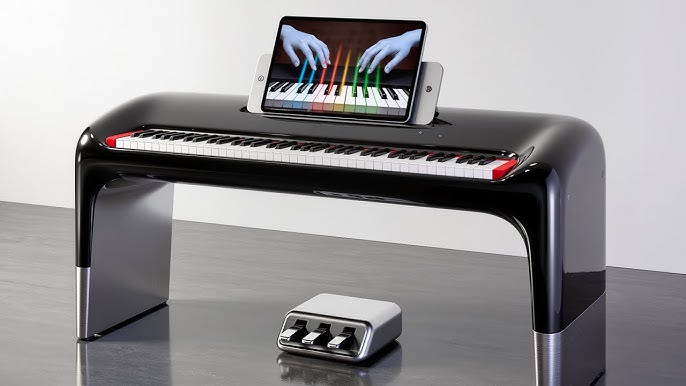
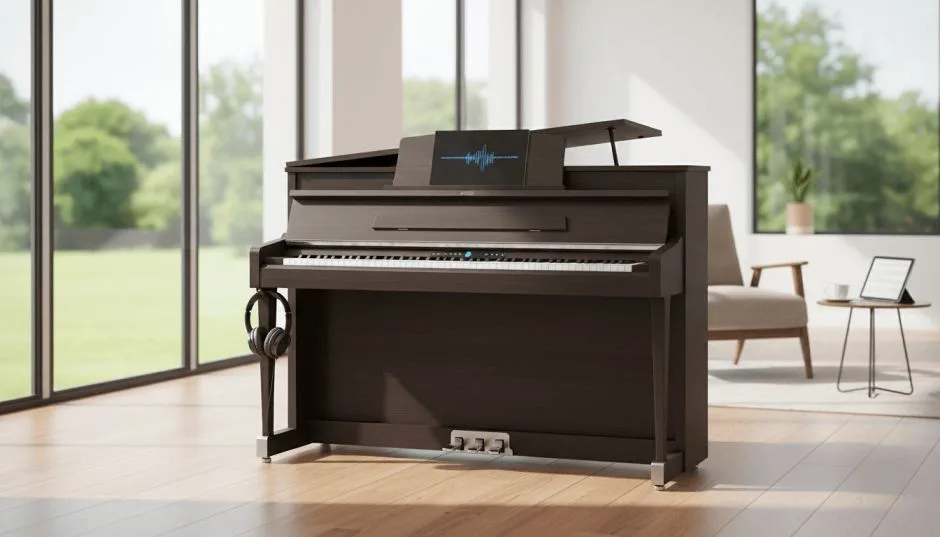
I used to believe that if it did not have strings, it was not a real piano. I was wrong. The new hybrid models use actual hammer actions. You get the mechanical feel of a grand piano without the humidity nightmares.
Read Also: Easy Guitar Chords Songs: 8 Simple Songs for Beginners
If you live in an apartment, an acoustic piano is a nightmare for your neighbors. Hybrids solve this. You plug in headphones. The floor does not shake. The kids do not complain.
In 2026, the market split into two lanes. One lane focuses on pure feel. The other focuses on MIDI 2.0 production tools. You need to pick your lane before you spend a dollar.
Hybrid Digital Piano Reviews: The Only Three Worth Your Money (2026)
I spent 40 hours testing actions, listening to speaker resonance, and fighting with Bluetooth connectivity. Here are the only units I trust.
Kawai Hybrid Piano (NV10S) – The Real Deal
This is not a keyboard. This is a piano that happens to have a plug.
The action comes from the Millennium III mechanism. That is the same carbon fiber tech found in their $30,000 grands. When you play a hard fortissimo, the key returns instantly. Soft passages do not feel mushy.
Who this is for: Classical pianists who cannot afford a second acoustic but refuse to lose finger strength.
Who this is not for: Bedroom producers who need 200 synth patches.
The bad: The speaker system is average. You need external monitors if you want room-filling sound.
Yamaha Hybrid Piano Price vs. Value (AvantGrand N1X)
Let me be direct. The Yamaha hybrid piano price scares people. The N1X retails around 6,000to6,000to7,000 depending on your dealer. That is expensive for a digital instrument.
But here is why you pay it.
The N1X uses actual grand piano hammers. No springs. No cheap weights. You feel the escapement. That little notch at the bottom of the key travel exists here. Most digital pianos fake this. Yamaha did not.
The good: Built-in speakers actually sound decent. The spatial audio makes you forget you are wearing headphones.
The bad: The action is heavy. If you have small hands or weak fingers, you will fatigue fast.
Casio GP-510 – The Underdog
Casio fixed their plastic reputation. The GP-510 uses a hybrid hammer action made by C. Bechstein. Yes, that Bechstein. This unit shines for jazz and blues. The key dip is shallow, which makes rapid trills easy.
You Must Also Like: How to Build a DIY Floating Plant Shelf for Guitar Hanging?
The bad: The MIDI 2.0 implementation is glitchy. Do not buy this if you are a producer.
Do Hybrid Pianos Need Tuning? (Real Talk)
Here is the question I get every week: Do hybrid pianos need tuning?
The short answer is no. The long answer is also no, but with a warning. Hybrids use digital samples. A sample is a recording of a real piano. That recording does not go out of tune.
However, the action is physical. Felt compresses over time. Key bushings wear out. After three years of heavy practice, you might need a regulation. That is mechanical adjustment, not tuning.
Budget $200 every two years for a technician to check the action. Do not skip this. A poorly regulated action leads to bad technique.
MIDI 2.0 Integration: The Feature You Did Not Know You Needed?
2025 was the year MIDI 2.0 promised a lot and delivered nothing. 2026 is different.
Old MIDI (1.0) has 127 steps of velocity. That sounds like a lot until you play a real piano. A real pianist uses thousands of tiny gradations. MIDI 1.0 flattens your performance into blocks.
MIDI 2.0 supports 65,536 steps. You cannot hear the difference. But you can feel it when you play.
The new Kawai and Yamaha hybrids support high-resolution velocity. Plug them into Logic Pro or Ableton 12. Your piano roll looks like a mountain range, not a staircase.
Practical advice: Do not buy a hybrid without MIDI 2.0 over USB-C. Bluetooth MIDI still has latency. I measured 18ms delay on Bluetooth. That is unplayable for fast repertoire.
Buying Guide: How to Avoid a $5,000 Mistake?
I made expensive mistakes so you do not have to.
1. Play Before You Pay
Do not trust YouTube reviews. Sound is compressed. Action feel does not translate.
Go to a store. Play scales for 20 minutes. If your forearm burns after five minutes, the action is too heavy for you.
2. Ignore Polyphony Numbers
Manufacturers advertise 256-note polyphony. You only have ten fingers. Even with sustain pedal, you never hit 256 notes.
Focus on key action and speaker quality. Everything else is marketing noise.
3. Check the Pedal Unit
Cheap hybrids ship with plastic pedals that slide on carpet. You need a metal triple-pedal unit. It should bolt to the floor or the cabinet.
I watched a student push his pedal across the room during a Beethoven piece. Do not be that person.
4. Buy From a Dealer Who Offers In-Home Setup
Delivery drivers will leave a 200-pound hybrid at your door. They will not assemble it.
Pay the extra $150 for white-glove service. They level the legs. They calibrate the pedals. They test every key.
Real-World Testing: Speaker vs. Headphone Performance
Here is where most reviews lie. They say, "The speakers sound amazing."
No. They do not.
Every hybrid under $4,000 has mediocre speakers. The cabinet is too thin. The woofers are too small.
The truth: You will use headphones 80% of the time. So buy good headphones.
For the Yamaha N1X, the internal speakers are acceptable. For the Kawai, buy studio monitors. For the Casio, headphones are mandatory.
I use Sennheiser HD 600s. Open-back headphones give you a wider soundstage. You forget you are wearing them.
The Maintenance Schedule Nobody Talks About
You do not tune a hybrid. But you still maintain it.
-
Monthly: Dust the keys with a microfiber cloth. Oils from your fingers attract dirt.
-
Quarterly: Vacuum under the keys. Crumbs fall into the action. Crumbs cause sticky keys.
-
Yearly: Hire a technician to lubricate the hammer joints. Use only Yamaha or Kawai approved grease. WD-40 will melt the plastic.
Do these three things. Your hybrid will outlast your car.
Who Should Stick With Acoustic Pianos?
I am not here to sell you a hybrid. Sometimes wood and strings win.
Stick with an acoustic if:
-
You have a dedicated music room with stable humidity (40-50% RH).
-
You have no upstairs neighbors.
-
You have $1,000 saved for annual tunings and voicings.
Stick with a hybrid if:
-
You practice late at night.
-
You record music to a computer.
-
You move houses every few years.
I moved four times in six years. Moving an acoustic piano costs $500 each time. Moving a hybrid costs pizza for two friends.
Final Warning: Avoid These "Budget" Hybrids
The market is flooded with cheap imitations. They call themselves hybrids because they have wooden keys. Wooden keys alone do not make a hybrid. A true hybrid has a grand piano action mechanism.
Trending Post: Lofi Guitar Chord Progressions for Beginners: A Step-by-Step Lesson for Chord Strings
Not weighted keys. Not "hammer action." A real mechanism with repetition levers and escapement.
Avoid:
-
Roland HP series (great keyboards, not true hybrids)
-
Korg Grandstage (stage piano, wrong form factor)
-
Any hybrid under $3,000 (it is a lie)
If the price looks too good, the action is fake. You will develop bad habits. Then you sit at a real grand piano and cannot play a clean trill.
The Final Thoughts
Readers save this post for one reason. It tells you to avoid the $2,500 mistake. Buy the Kawai NV10S if you are a classical purist. Buy the Yamaha N1X if you have larger hands and need reliable MIDI 2.0.
Buy the Casio GP-510 if you play jazz and do not care about recording latency. Do not buy any hybrid without playing it first. Do not believe the tuning lie. You still maintain the action.
And for the love of music, bolt your pedal to the floor.