I remember the first time I tried building a pedalboard. I had no clue what I was doing. I just plugged everything in randomly. The sound was a mess. Muddy. Noisy. Nothing like the records I loved. I learned the hard way that pedal order changes everything.
Let me save you the frustration. This guide explains the classic rock guitar signal chain. The standard order. The reasons behind it. The exceptions that define rock history.
I have spent years tweaking my pedalboard. Trial and error. Lots of frustration. Lots of noise. But I finally figured out what works for classic rock. The classic rock guitar signal chain explained here is what I use. It is not the only way. But it is a solid foundation.
What Is a Guitar Signal Chain?
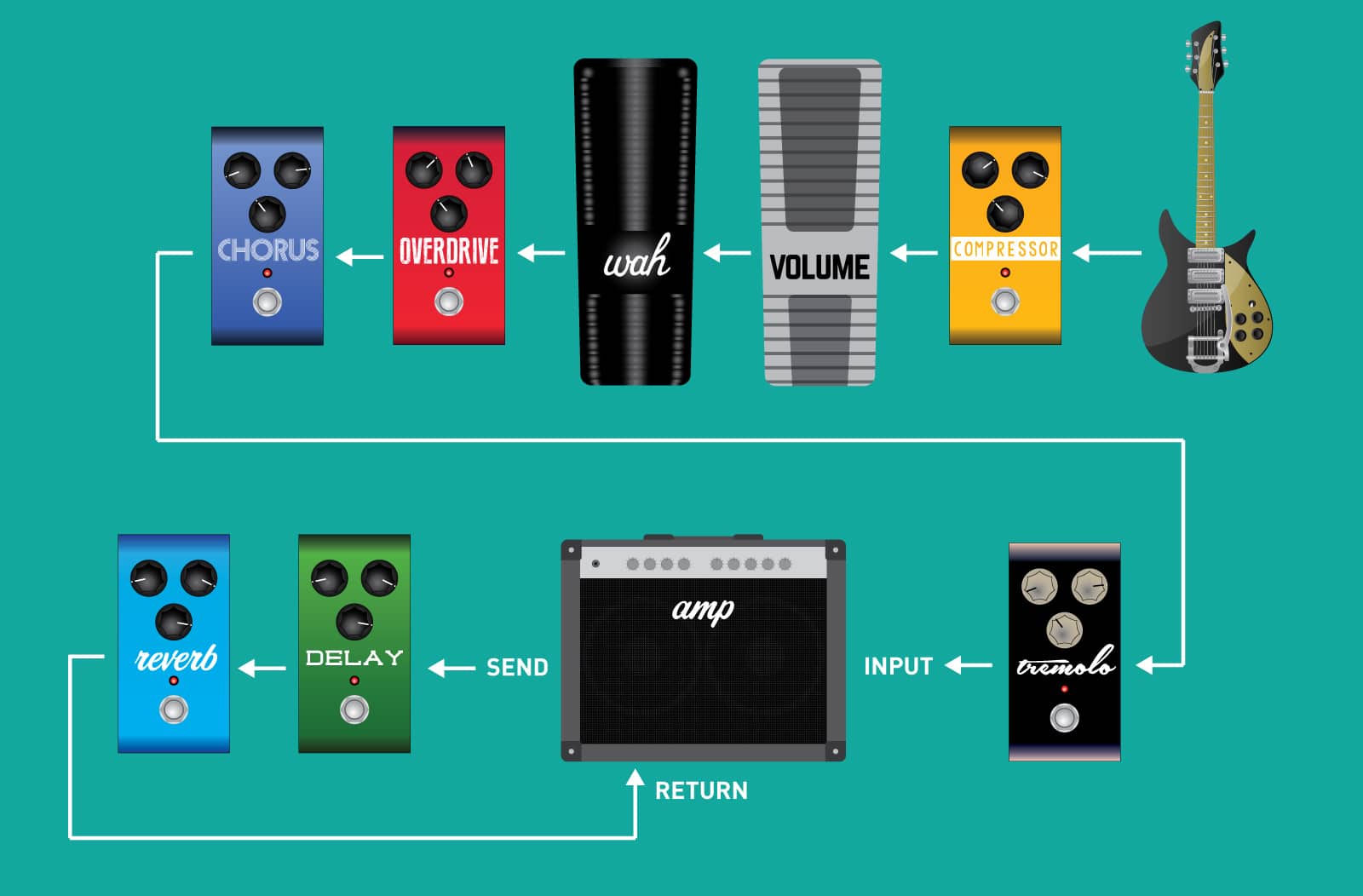
Your guitar signal starts at your pickups. It travels through cables and pedals before reaching your amplifier. Every pedal in that path changes the sound in some way . The order of those pedals matters enormously.
Read Also: Fender Tone Master Pro vs Line 6 Helix for Live Setup 2026
Think of it like cooking. Ingredients added in the right sequence create a great dish. The wrong order ruins it. Same with pedals. A delay before distortion sounds completely different from distortion before delay.
There is no single right answer. Tone is personal. But most professionals follow a general sequence. It works. It gives you a clean, defined sound . Once you know the rules, you can break them deliberately.
The Standard Classic Rock Signal Chain
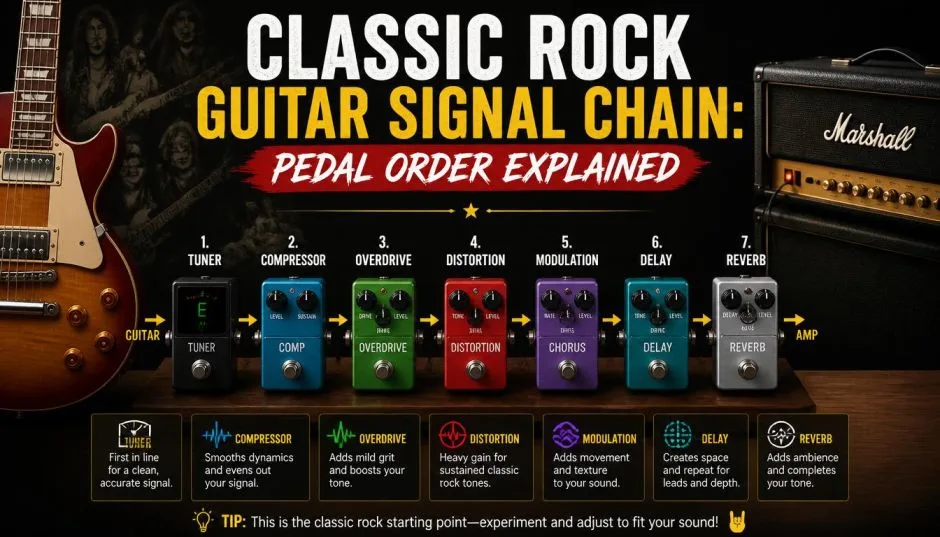
Here is the order that most classic rock players use. Guitar first. Amp last. Pedals in between.
Guitar → Tuner → Wah/Filter → Compressor → Overdrive/Distortion → Modulation → Delay → Reverb → Amp
Let me explain each section.
Why This Order Works?
Tuner First
Your tuner needs a clean signal. It cannot detect pitch accurately if the signal is distorted or delayed. I made this mistake once. Ran my tuner after my overdrive. It kept jumping around. I could not get a stable reading. Moving it to the front fixed everything.
Wah and Filters Early
Wah pedals respond to your picking dynamics. They need a clean, uncompressed signal to work properly. If you put wah after distortion, the effect becomes harsh and aggressive. Some players like that. But for classic rock, wah comes early. Hendrix. Clapton. They all did it that way.
Compressor Next
Compression evens out your volume. It boosts quiet notes and tames loud ones. Place it early in the chain. You want to compress your clean guitar tone, not the sound of your other pedals. If you put compression after distortion, you will amplify all the noise and hiss.
Overdrive and Distortion
These pedals create the core of your tone. They should come after compression but before modulation. Distortion adds harmonics and clipping. You want that distortion applied to your clean signal, not to your delay or reverb trails.
You Must Also Like: Have Yourself a Merry Little Christmas Guitar Chords?
If you use multiple gain pedals, stack them from lightest to heaviest. A boost into an overdrive into a distortion. That gives you more gain stages to play with.
Modulation Effects
Chorus, flanger, and phaser come after your drive pedals . These effects modulate the distorted signal. That gives you a richer, more pronounced effect. Some players put modulation before distortion. That creates a subtler, more organic sound. But the classic setup puts it after.
Delay and Reverb Last
Time-based effects belong at the end of the chain. Delay repeats your sound. Reverb adds space. Both should affect your complete tone, including all your drive and modulation.
If you put delay before distortion, the repeats get distorted too. That can become muddy very quickly. Unless you are going for that specific sound. The Edge from U2 famously runs his delays into an overdriven amplifier . But that is the exception.
The Effects Loop Option
Many amplifiers have an effects loop. This sits between the preamp and power amp sections. It lets you place delay and reverb after your amplifier's built-in distortion.
If you use your amp for overdrive, put your modulation and time-based effects in the loop. That keeps them after the gain stage. Your cleans will sound cleaner. Your delays will be more defined.
Classic Rock Examples
The Basics
A good guitar into a cranked amplifier. That is the core of classic rock. Les Pauls. SGs. Strats. Teles. Marshalls. Fenders. Voxes. The combination creates the sound. Pedals add flavor.
Wah and Overdrive
Most classic rock players use a wah and an overdrive. Nothing more. They rely on their guitar's volume knob to clean things up . Turn down for rhythm. Turn up for leads. Simple and effective.
Subtle Modulation
Chorus and phaser appear in classic rock. But subtly. A little bit of phase on a clean part. A touch of chorus on a slow ballad. Nothing over the top.
Common Mistakes to Avoid
Putting Delay Before Distortion
Your delays will get distorted. The repeats will become messy. Unless you are going for that specific sound, keep delay after your drive pedals.
Reverb Before Delay
Reverb has a long decay. Putting it before delay means your delay repeats will include reverb tails. That gets muddy. Put reverb after delay.
Ignoring Your Amp's Effects Loop
If your amp has a loop, use it. Put your delay and reverb there. They will sound cleaner.
The Final Thoughts
The classic rock guitar signal chain follows a logical order. Tuner first. Gain pedals early. Modulation in the middle. Delay and reverb at the end. It works for a reason.
But do not be afraid to experiment. Some of the best tones came from breaking rules. Try your wah after distortion. Try your delay before overdrive. You might discover something new.
Start with the standard order. Understand why it works. Then break it deliberately. That is how you find your own sound.