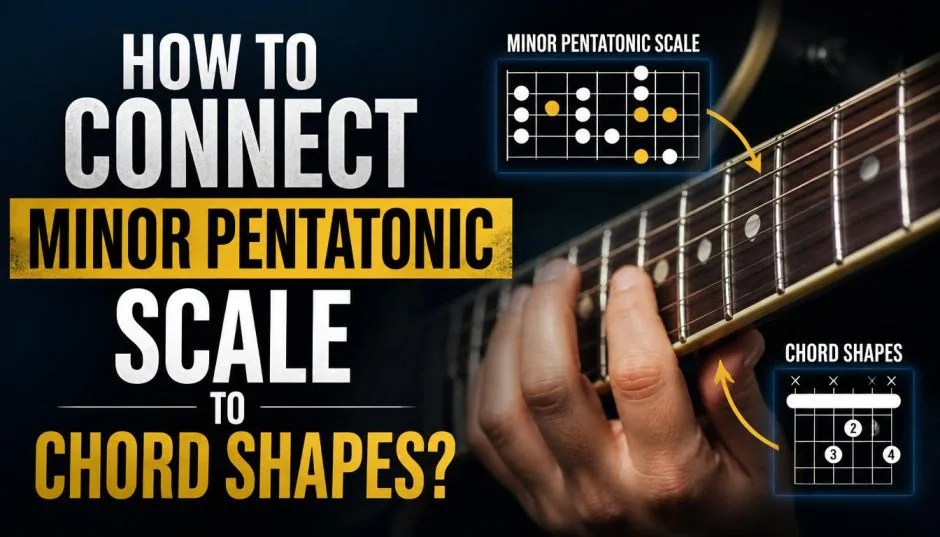
You know the minor pentatonic shape. Your fingers fly through it. But your solos sound like exercises, not music. The problem is not your speed. The problem is you are playing scales, not hearing chords. I made this mistake for two years.
Learning to connect pentatonic with chords turns random notes into actual melodies. Below is exactly how to do it. No theory overload. Just practical steps.
Why Most Guitarists Fail to Connect Pentatonic with Chords?
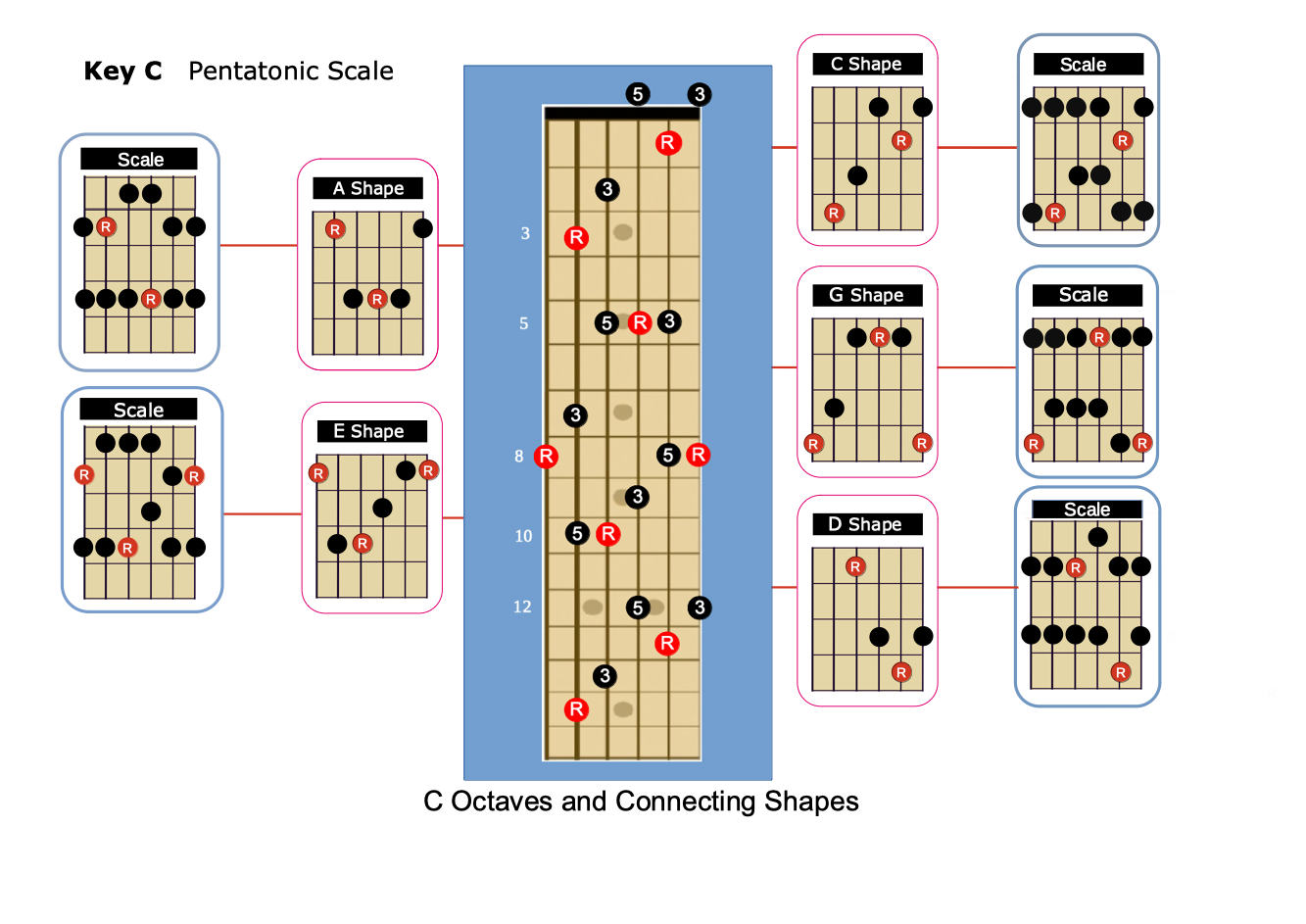
Here is the hard truth. Most players learn the minor pentatonic as one big shape. Five notes. Two frets per string. Same pattern everywhere. That pattern works. But it hides something important.
Read Also: Lofi Guitar Chord Progressions for Beginners: A Step-by-Step Lesson for Chord Strings
That shape contains three different chords inside it.
When you play random notes from that shape, you sometimes hit chord tones. Sometimes you hit passing notes. Sometimes you sound great. Sometimes you sound lost. You cannot tell the difference because you never learned which notes belong to which chord.
I see this all the time at open mic nights. Fast fingers. Zero direction. The player looks confident but sounds confused.
The fix is simple. Learn which notes inside your pentatonic shape match the chord you are playing over. Then emphasize those notes. Everything else becomes decoration.
The One Shape You Already Know (And How to See Chords Inside It)
Let us use the most common key. A minor. The A minor pentatonic shape starts at the 5th fret.
Here are the notes in A minor pentatonic:
-
A (root)
-
C (minor third)
-
D (fourth)
-
E (fifth)
-
G (minor seventh)
Now here is what your guitar teacher probably never showed you. Those five notes belong to three different chords.
A minor chord: A, C, E
D minor chord: D, F? Wait. F is not in A minor pentatonic. Correction. D minor chord uses D, F, A. Your pentatonic has D and A but no F. So you cannot play a full D minor chord. But you can play D and A as two-note chord fragments.
E minor chord: E, G, B? B is not in A minor pentatonic. So again, you get E and G as two-note fragments.
The point is not to play full chords. The point is to target the notes that match the backing chord.
Step One: Find the Chord Tones Inside Your Scale Shape
Grab your guitar. Play the A minor pentatonic at the 5th fret. Now do this.
Play just those three notes over an A minor backing track. That is it. Three notes. A, C, E. You will sound musical immediately.
When the backing chord changes to D minor: Your scale shape still fits. But now your target notes change. Target D (5th fret A string, 7th fret G string, 10th fret B string), F? F is not in your scale. So you cannot target F. That is a problem. The solution? Play D and A together as a two-note double stop. Bend into the notes. Add rhythm.
When the backing chord changes to E minor: Target E and G. Same idea. Two-note fragments.
The Exercise That Fixed My Playing
Set up a simple backing track. One chord per bar. A minor for four bars. D minor for four bars. E minor for four bars. Repeat.
Now play only the chord tones I listed above. No other notes. If you hit a note that is not A, C, or E over the A minor chord, you made a mistake. Stop. Correct it.
Do this for ten minutes a day for one week. Your ear learns which notes sound "home" and which notes sound "away". That is the foundation of connecting scales to chords.
I hated this exercise when my teacher gave it to me. It felt boring. It felt slow. Then after one week, I played over a real song. Suddenly I heard the chord changes. I knew exactly which notes to land on at the end of a phrase. My solos sounded like singing instead of typing.
How to Practice Pentatonic Riffs and Runs Guitar Style?
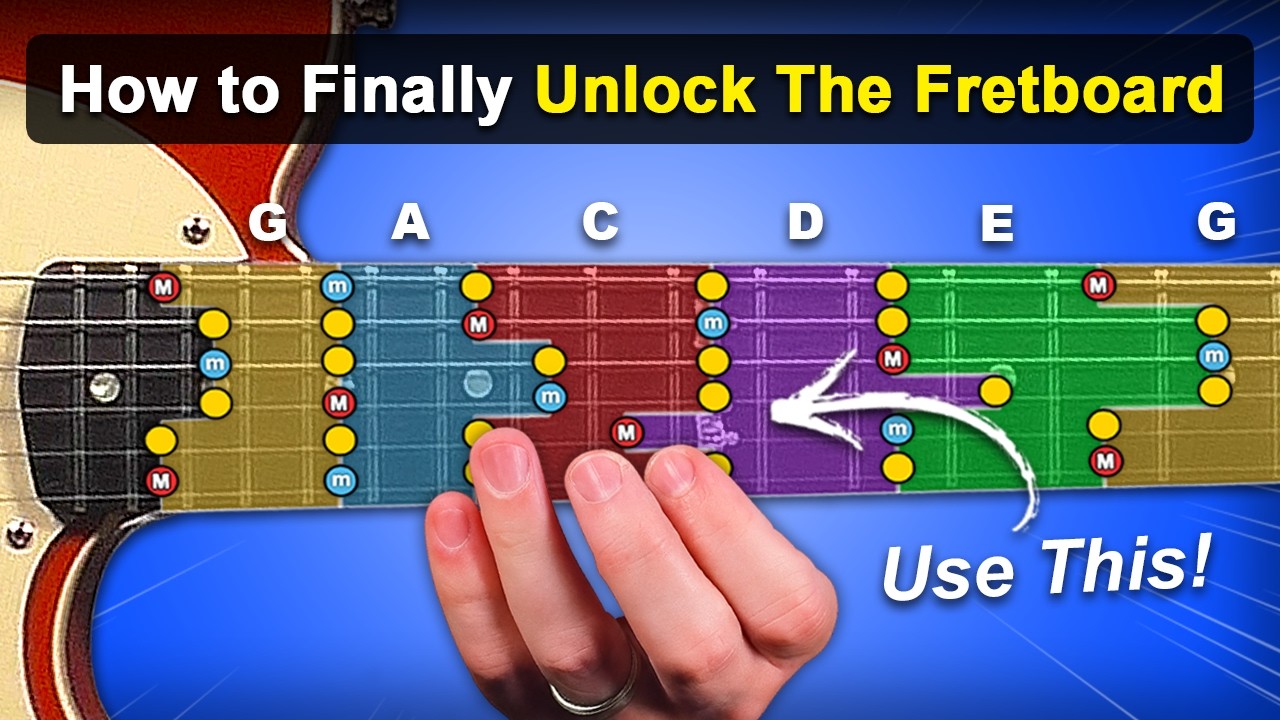
Pentatonic riffs and runs guitar players love usually fall into two categories. Riffs that stay on one chord. Runs that move with the changes. Here is a practical drill.
You Must Also Like: The Piano Lesson by August Wilson: Summary & Themes
Same rhythm. Same phrasing. Different notes. This teaches your fingers to follow the harmony.
Run drill: Play a five-note ascending run. Start on A over the A minor chord. End on D as the chord changes to D minor. Or start on E over A minor and land on G as the chord moves to E minor.
The run connects the chords. It creates forward motion. Listen to David Gilmour or B.B. King. They do this constantly.
Common Mistakes (I Made All of These)
Mistake one: Playing the same notes over every chord. Your pentatonic scale fits the whole song. That is true. But the chord tones move. A is the fifth of D minor. It works. But it is not the note your ear wants. Your ear wants D or F (and F is not in your scale). That tension is why blues sounds the way it does. Learn to hear it.
Mistake two: Forgetting the root. They are never wrong. Start every phrase on the root. End every phrase on the root. Then add other notes in between.
Mistake three: Playing too many notes. Speed hides bad note choices. Slow down. Play quarter notes. Hold each note. Ask yourself: "Does this note fit the chord right now?" If you cannot answer, you are not listening.
Real Song Examples to Study
Grab your guitar and try these.
"The Thrill is Gone" by B.B. King. Key of B minor. B minor pentatonic. Listen to how B.B. lands on the root (B) at the end of almost every phrase. He plays other notes. But he always returns home.
"Stairway to Heaven" solo by Jimmy Page. Key of A minor. A minor pentatonic with a few extra notes. Page targets A and C over the A minor chord. When the chord changes to F and G, he adjusts his target notes. You can hear him thinking through the changes.
"Black Magic Woman" by Santana. Key of D minor. D minor pentatonic. Santana bends into the root (D) constantly. He uses long sustained notes on chord tones. The fast runs are just decoration around those target notes.
Study these solos with your guitar in hand. Do not just listen. Play along. Pause after each phrase. Identify the chord underneath. Identify the note Carlos or Jimmy or B.B. landed on. That note is almost always a chord tone.
Tools to Make This Easier
Loop pedal. Record a simple chord progression. A minor for two bars. D minor for two bars. Loop it. Now practice your target notes over the loop. No rushing. No backing track changes every four seconds. Just a steady loop until you get it right.
Slow down software. YouTube playback speed at 0.5x. Slow down solos you love. Hear exactly which notes line up with each chord change.
One-chord backing tracks. Search YouTube for "A minor one chord backing track". Practice targeting A, C, and E for five minutes. Then switch to "D minor one chord backing track". Practice D and A. Then switch to "E minor one chord". Practice E and G. Master each chord separately. Then combine them.
The Mindset Shift That Matters
Stop thinking of the pentatonic scale as a shape. Start thinking of it as a pool of notes you can choose from. Some notes sound stable (chord tones). Some notes sound tense (non-chord tones). Both are useful. But you need to know the difference.
When you play a tense note, understand why it sounds tense. Understand how to resolve it to a stable note a half step or whole step away. That tension and release is what makes music emotional.
My old playing had all tension and no release. I played the "wrong" notes but never resolved them. It sounded anxious. Once I learned to resolve non-chord tones to chord tones, my playing sounded intentional. Like I meant every note.
The Final Thoughts
Learning to connect pentatonic with chords is the single most important step between sounding like a scale exerciser and sounding like a musician. The pentatonic shape is your map. The chord tones are your destinations. Everything else is scenery.
Start with one chord. A minor. Play only A, C, and E. Master that. Then add D minor. Then add E minor. Slow down. Listen. Land on chord tones. Resolve your tension.
I wasted two years playing random notes with fast fingers. Do not make my mistake. Do the boring exercises. Learn the chord tones. Your solos will sound like music instead of a typing test.