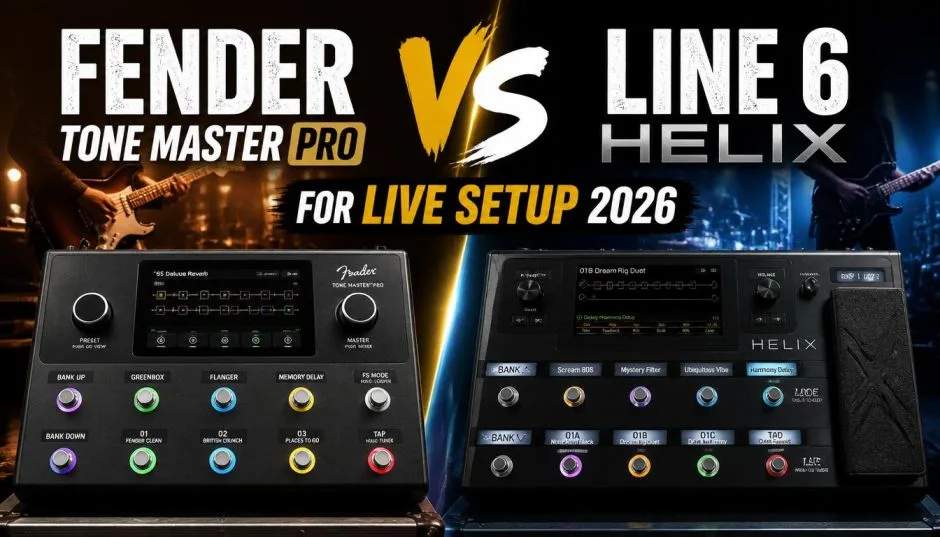
I spent last month testing both of these floor modelers side by side. Three rehearsals. Two live gigs. Lots of frustrated late nights scrolling through menus.
The short answer? Both sound great. But they serve completely different players. Pick the wrong one and you will fight it every single show. In this paragraph, want to know how to setup Fender Tone Master Pro vs Line 6 Helix?
Here is what nobody tells you before you drop $1,700.
The Main Difference Nobody Talks About
The Fender Tone Master Pro vs Line 6 Helix live setup debate misses one huge point. These two units come from completely different philosophies. Fender built the Tone Master Pro for guitar players who hate menus.
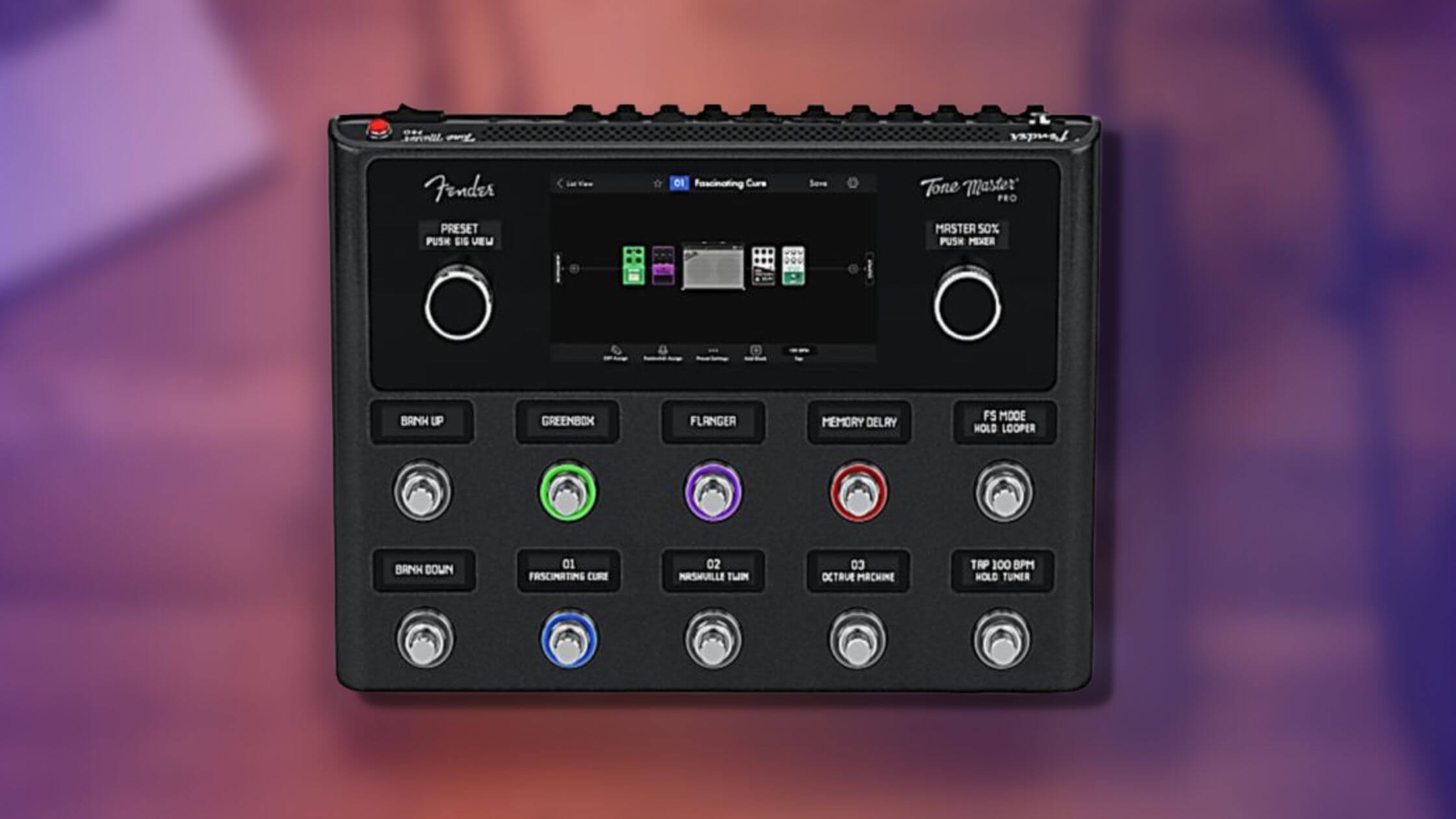
You turn it on. You see a picture of a Fender amp. You twist virtual knobs that look exactly like real knobs. It feels like a pedalboard.
Read Also: How to Build a DIY Floating Plant Shelf for Guitar Hanging?
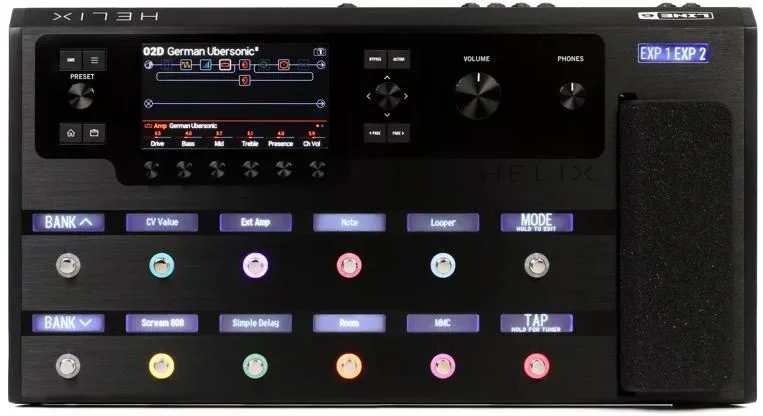
Line 6 built the Helix Stadium for power users. You get a massive touchscreen. Eight physical rotary controls. Endless routing options. You can control your band's lighting and backing tracks from the same box.
One is a guitar pedal. The other is a command center.
What Is Fender Tone Master Pro? The Simple Explanation
The Tone Master Pro is Fender's first-ever multi-effects unit. Launched in 2023. Priced around $1,700. Direct competitor to Quad Cortex and Fractal.
Here is what makes it special. Fender owns the rights to Fender amp names. Other modelers call a Twin Reverb something like "Double Reverb" to avoid lawsuits. Fender just calls it a Twin Reverb. With the original logo.
The touchscreen shows you a photo of the actual amp or pedal. Turn the knob on screen. It turns just like the real thing.
Is Fender Tone Master Pro good? Yes. For certain people. More on that below.
The Helix Stadium: What Changed in 2026
Line 6 dropped the Helix Stadium XL and Floor in late 2025. This is not your older Helix. The Stadium line adds three major upgrades.
Agora modeling. New component-level circuit modeling that goes deeper than the original Helix. Feels more responsive to your picking attack. High-gain amps sound tighter. Edge-of-breakup cleans have more "give" when you dig in.
Eight-inch touchscreen. The old Helix had a small non-touch display. The Stadium gives you a high-res touch interface with anti-glare coating.
Showcase feature. This is the big one. The Stadium can run your backing tracks, send MIDI commands to your band's lighting rig, control click tracks, and recall presets. All from one box.
The Stadium Floor (no expression pedal) competes directly with the Tone Master Pro on size. The Stadium XL adds the expression pedal and more footswitches.
Sound Quality: What Your Ears Actually Hear?
I ran both units through the same PA. Same FRFR cab. Same guitar. Here is what I heard.
Fender Tone Master Pro cleans are stunning. The Twin Reverb model breathes. It chimes. It reacts to your volume knob like a real tube amp. One reviewer called it "stunningly good".
You Must Also Like: How to Connect Fractal AM4 to Computer Step-by-Step 2026?
The edge-of-breakup sounds? Also excellent. You can dial in that point where the amp just starts to crumble. Takes seconds, not hours.
Fender high-gain models are the weak spot. The EVH and Marshall JCM800 models sound synthetic. One user described them as lacking "presence and charm" for hard rock. Fender has improved these with firmware updates. But still not at Fractal or Neural DSP level.
Helix Stadium high-gain feels different. The new Agora modeling gives you tighter low-end response. Fast palm-muted passages track better. Less high-frequency "hash" when you scoop the mids.
Helix Stadium cleans are good. But different. The Helix sounds like a mic'd Fender amp through studio monitors. The Tone Master Pro sounds like a Fender amp in the room. Subtle difference. Important for some players.
One user put it perfectly: "The Helix amps all sound great, but they tend to have their own distinct characteristics that don't always 100% correlate to the real life amps".
The Interface Battle: Touchscreen vs Knobs
Fender wins this easily.
The Tone Master Pro interface is intuitive. You do not need to read a manual. The touchscreen shows you a picture of a Super Reverb. You tap the virtual knobs. You turn them. The sound changes.
One user said: "The configuration of sounds is done in no time. The EQ and menu layout make you gain time to be able to play as much as possible with your guitar".
Another reviewer gave it 10 out of 10. Called it "the easiest to use" among high-end modelers.
Helix Stadium also has a touchscreen. It works well. The combination of touch plus eight physical knobs gives you options. But it is more complex. More menus. More things to learn.
The Stadium does give you OLED scribble strips above each footswitch. Shows you exactly what each switch does. No more guessing.
What The Reviews Say: Real Users, Real Problems?
Fender Tone Master Pro praise:
-
"Very plug and play for a multi-effect of this kind"
-
"The effects are amazing, in mono and stereo"
-
"Excellent bit of kit. A very intuitive interface with great guitar tones"
-
"Simplicity itself to set up"
Fender Tone Master Pro complaints:
-
"The saturation and OD for me still sound a bit synthetic for hard rock"
-
"Compared to competing products, the number of built-in amps and effects is considerably smaller"
-
"No capture method, so users cannot arbitrarily add models"
-
Heavy at 4kg. Large footprint
Helix Stadium praise:
-
"Agoura amps seem to have a more familiar response to touch and pick attack"
-
"Showcase feature bids to replace the band's laptop"
-
Built-in Wi-Fi for editing. MicroSD card storage. Extensive I/O
Helix Stadium complaints:
-
1-2 second audio drop when switching presets. A major live performance issue that did not exist on the original Helix
-
Proxy capture feature promised but still not available as of early 2026
-
"Limited modulation effects" according to some users
-
Feels "unfinished and underwhelming" for the $2,200+ price tag
-
One user called it "early adopter" territory with bugs and glitches
Live Setup: Which Works Better on Stage?
I tested both at actual gigs. Here is the reality.
Fender Tone Master Pro shines if you run direct to PA. XLR outputs. Cab sims on. The sound guy will love you. No stage volume battles.
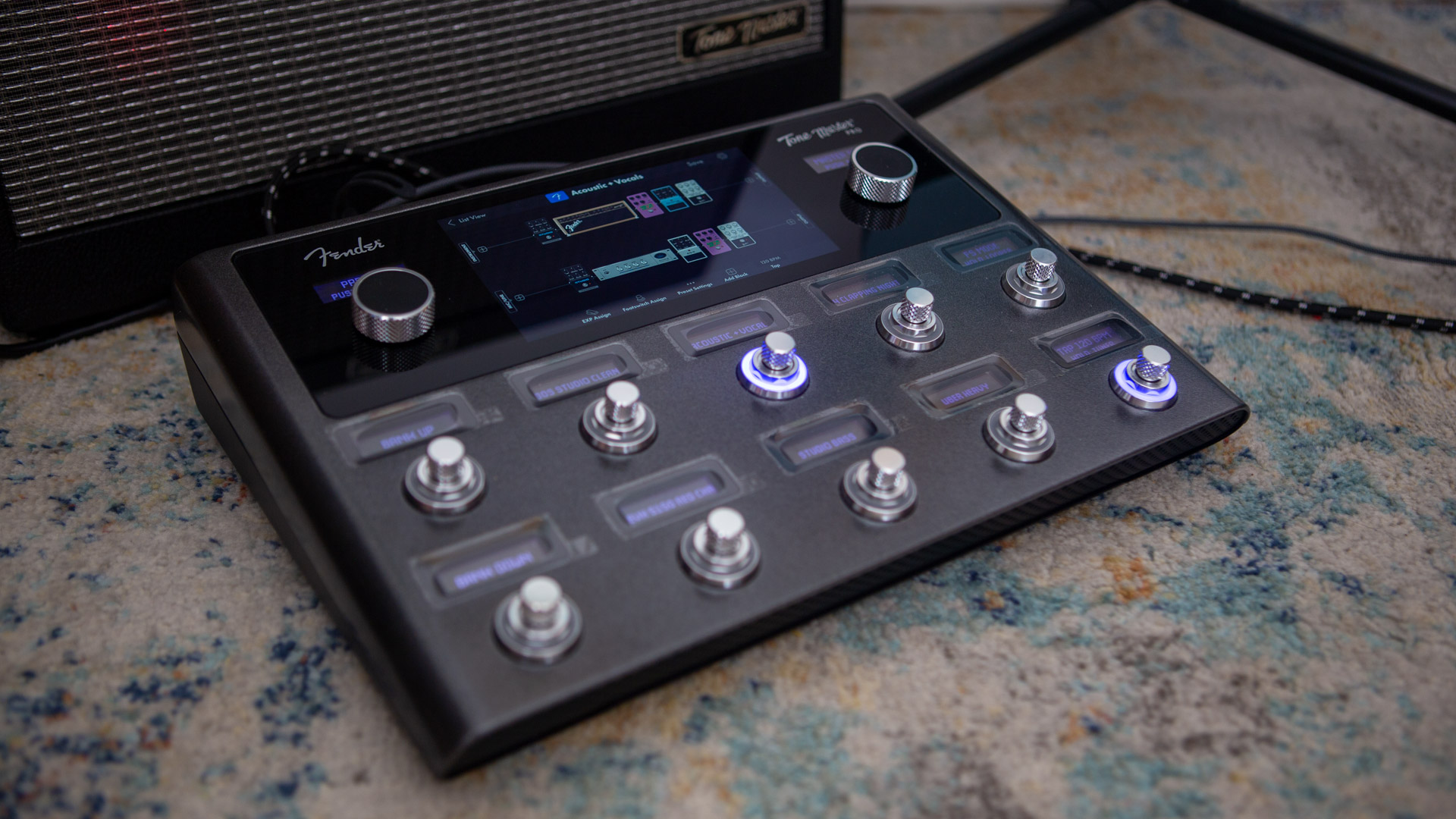
But if you want to run into a traditional guitar cab, be careful. One user bought the EVH Hypersonic speaker with his Tone Master Pro. Hated it. "Not dynamic" was his exact words. He switched to a Seymour Duncan Powerstage power amp into a regular cab. Much happier.
Helix Stadium XL gives you more live control. The Showcase feature alone makes it worth considering for full-band setups. You can trigger backing tracks, change your amp channels, and control lights from the same box.
But that preset gap issue scares me. A 1-2 second audio drop when switching presets is unacceptable for live use. Line 6 says they will fix it. As of early 2026, still a problem.
Fractal FM3 vs Fender Tone Master Pro: Quick Comparison
The Fractal FM3 vs Fender Tone Master Pro comparison comes up constantly. Here is the short version.
Fractal sounds incredible. Many pros swear by it. But the interface is complex. You need to study to use it properly. The Tone Master Pro you can figure out in an afternoon.
Fractal also has better effects and routing than Fender. But if you just want great Fender amp tones without the learning curve, the Tone Master Pro wins.
Fender Tone Master Pro vs Quad Cortex: The Capture Question
The Fender Tone Master Pro vs Quad Cortex debate centers on one feature: capture.
Quad Cortex lets you profile your own real amps. Neural DSP's capture technology is excellent. You can borrow a friend's vintage Plexi and copy it.
Fender has no capture feature. You get the built-in models. That is it. Fine if those models cover your needs. Limiting if you want to clone your personal collection.
Who Should Buy Each One?
Buy the Fender Tone Master Pro if:
-
You primarily play Fender-style cleans and edge-of-breakup tones
-
You hate menu diving and want something that works immediately
-
You run direct to PA at gigs
-
You do not need to capture your own amp models
-
You want the easiest possible user experience
Buy the Line 6 Helix Stadium if:
-
You play high-gain styles and want tight, modern tones
-
You need extensive I/O and routing options
-
Your band uses backing tracks, click, and MIDI-controlled lighting
-
You are willing to deal with early-adopter bugs and unfinished features
-
You have $2,200+ to spend (significantly more than the Tone Master Pro)
The Final Thoughts
The Fender Tone Master Pro vs Line 6 Helix live setup decision comes down to one question. Do you want an instrument or a computer? The Tone Master Pro is an instrument. Turn it on. Play. It sounds like a Fender amp. You will not fight it.
The Helix Stadium is a computer. A very powerful computer. It can run your whole show. But it has bugs. Missing features. A learning curve.
For most working guitarists who just want great Fender tones live, buy the Tone Master Pro. For tech-forward players running complex productions, wait until Line 6 fixes the Stadium's issues.
I am keeping the Tone Master Pro on my board. The Helix Stadium goes back.