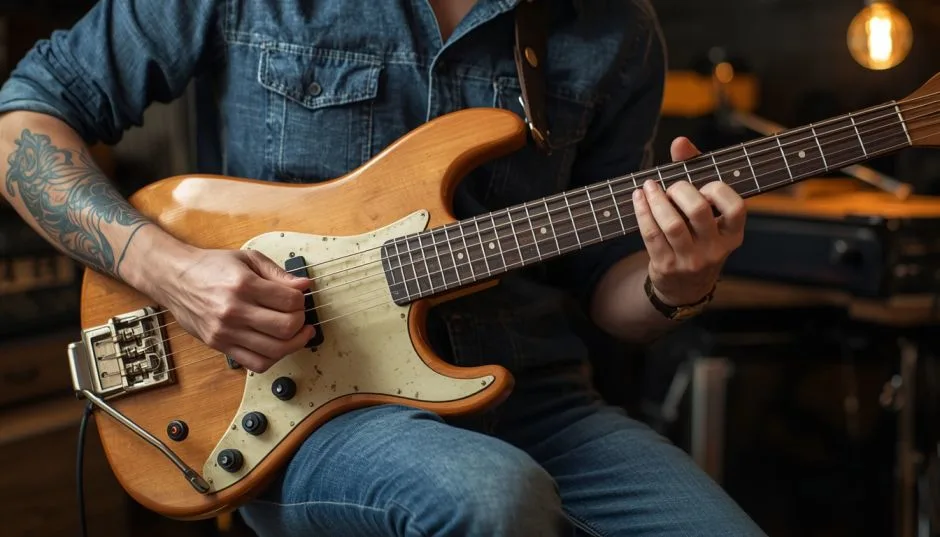
Tuning a guitar is one of the most essential skills each guitarist must ace. An out-of-tune guitar sounds awful, no matter how exorbitant it is or how gifted you are. Luckily, present day innovation has made tuning simpler than ever.
Tuning your guitar is key, whether you're a apprentice or an experienced player. Utilizing a guitar tuner makes a difference you accomplish a way better sound right away.
In this comprehensive guide, you’ll learn everything you need to know around tuning a guitar using a tuner. We’ll discuss different sorts of tuners. Then, we’ll go through tuning strategies step-by-step.
We’ll moreover highlight common botches to dodge and share progressed tuning tips. This article appears you how to utilize an online guitar tuner and a tuner with a mic. It makes tuning simple, no matter where you are or when you need to do it.
Why Guitar Tuning Is So Important?

Before plunging into the prepare, it’s vital to get it why tuning matters.
Read Also: Best Strings for the Ukulele: Top Picks for Perfect Sound and Playability
A guitar works by creating particular pitches from each string. When strings are as well free or as well tight, they deliver inaccurate notes. Indeed a slight need of tuning can make chords sound offensive and tunes feel off. Legitimate tuning ensures:
- Clean, charming sound
- Accurate chord shapes
- Better ear training
- Improved playing confidence.
- Consistency amid hone and performance.
Tuning a guitar well should be the to begin with ability each guitarist learns.
Standard Guitar Tuning Explained
Most performers tune their guitars to standard tuning. This tuning has six strings set to these notes:
- 6th string (thickest): E
- 5th string: A
- 4th string: D
- 3rd string: G
- 2nd string: B
- 1st string (most slender): E
From most reduced pitch to most elevated pitch, the tuning is E–A–D–G–B–E.
A guitar tuner checks the pitch of each string. It appears if the note is level (as well moo), sharp (as well tall), or impeccably in tune.
What Is a Guitar Tuner?
A guitar tuner is a device or an app. It pays attention to the sound of your guitar strings. By then, it depends on the note and how in tune is the pitch. Tuners detect the vibration or sound frequency. They measure these by standard melodic pitches.
And there are several types of guitar tuners available today:
- Clip-on tuners
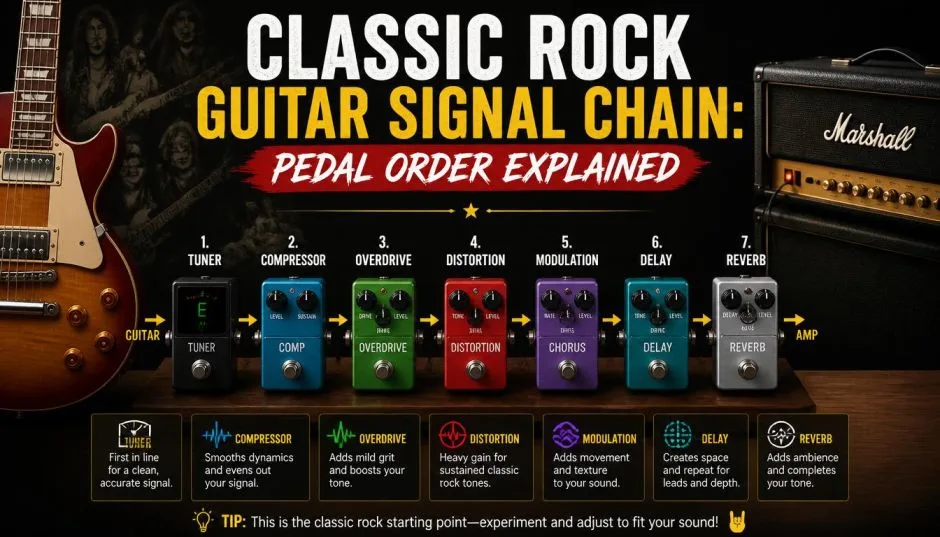
- Pedal tuners
- App-based tuners
- Guitar tuner online.
- Guitar tuner with mic.
Each sort has its advantages. These being aware can help you pick the Knowing these will be able to help you decide on the best choice for you.
Types of Guitar Tuners

1. Clip-On Guitar Tuners
Clip-on tuners attach to the guitar's headstock. They sense vibrations from the instrument. They are precise, calm, and perfect for boisterous environments.
Pros:
Works without outside sound.
Highly accurate
Portable and simple to use.
Cons:
Requires a physical device.
Battery dependent
2. Pedal Guitar Tuners
Pedal tuners are a standard device for electric guitarists in live exhibitions. They interface to the guitar through a cable.
You Must Also Like: How to Make DIY Guitar: A Step-by-Step Guide for Beginners
Pros:
Highly accurate
Durable
Silent tuning amid performances.
Cons:
Expensive
Not reasonable for acoustic guitars without pickups.
3. Guitar Tuner Online
A guitar tuner online is a web-based device that uses your device’s amplifier to identify sound. It does not require any establishment and works directly from a browser.
Pros:
Free and accessible
You do not require to download anything.
Ideal for beginners.
Cons:
Needs web access.
Background clamor can influence it.
4. Guitar Tuner with Mic
A mic guitar tuner employments your smartphone, tablet, or computer's built-in receiver. It tunes in to the sound of your strings.
Pros:
Convenient and broadly available.
Works for acoustic and electric guitars.
Great for domestic practice.
Cons:
Less exact in boisterous environments
Depends on mic quality.
How to Tune a Guitar with a Guitar Tuner (Step-by-Step)?
Now let’s walk through the correct handle of tuning your guitar utilizing a tuner.
Step 1: Plan Your Guitar
Sit in a calm environment.
Hold your guitar in a playing position.
Ensure you turn on your tuner or open your online guitar tuner.
Select “Guitar” or “Standard Tuning” if the alternative is available.
Step 2: Begin with the moo E string.
Pluck the thickest string (6th string) with a light touch to create a clear sound.
The tuner will show a note.
- If the note appears E, check the indicator:
- Left = Level (fix string)
- Right = Sharp (release string)
- Center = In tune
Turn the tuning peg with care until the tuner appears E and the pointer centers.
Step 3: Tune the A string
Move to the 5th string and rehash the same process.
Pluck the string → Observe the tuner → Alter the peg until it appears A in tune.
Step 4: Tune the D string
Pluck the 4th string and tune it until the tuner shows a D.
Step 5: Tune the G String
Tune the 3rd string to G. This string requires additional care since it regularly loses its tuning.
Step 6: Tune the B string
Tune the 2nd string until the tuner shows B.
Step 7: Tune the tall E string
Finally, tune the most slender string to E.
Once you tune all six strings, play a few chords, and recheck. Strings can move when pressure balances.
Using a Guitar Tuner Online Effectively
A guitar tuner online works best when utilized accurately. Take after these tips:
- Allow mouthpiece get to in your browser.
- Use earphones to dodge feedback.
- Tune in a calm room.
- Pluck one string at a time.
- Avoid strumming numerous strings.
Online tuners are idealize for speedy tuning sessions, particularly if you don’t possess a physical tuner.
How to Tune Guitar with a Guitar Tuner with a Mic?
Using a guitar tuner with a mic is like using an online tuner, but regularly more optimized for versatile devices. Best practices:
- Keep the mouthpiece near to the guitar.
- Pluck the strings with a solid hold, avoiding any harshness.
- Avoid foundation noise.
- Use the app’s visual markers carefully.
Many tuner apps let you switch between standard and interchange tunings. This makes them adaptable tools.
Common Guitar Tuning Botches to Avoid
Even with a tuner, tenderfoots frequently make these mistakes:
- Over-tightening strings
- Can break strings or harm the guitar.
- Tuning at an quickened pace.
- Always make little adjustments.
- Ignoring re-tuning
- New strings extend and require visit tuning.
- Tuning in boisterous environments
- Affect the precision of mic-based tuners
- Not checking tuning after playing.
Strings move with temperature and playing pressure.
Avoiding these botches helps keep up precise tuning and secures your instrument.
How Often Should You Tune Your Guitar?
- You should tune your guitar.
- Every time you play.
- After changing strings.
- After transporting the guitar.
- When the temperature or mugginess changes
Professional guitarists tune numerous times amid a single session. Steady tuning makes strides your ear and playing accuracy.
Advanced Tips for Superior Tuning Accuracy
- Always tune up to the note, not down
- Stretch unused strings with care after installation.
- Check tuning with chords, not single notes
- Use sounds for fine adjustments.
- Calibrate your tuner to A = 440 Hz (standard)
These little propensities make a huge contrast in sound quality.
Guitar Tuner vs Tuning by Ear
Learning to tune a guitar by ear is supportive. Yet, a tuner is much more precise, particularly for fledglings. Tuners offer assistance prepare your ear over time and anticipate terrible propensities caused by off base tuning. A guitar tuner with a mic or a guitar tuner online is the best beginning point for most players.
Final Thoughts
Tuning a guitar with a tuner is a straightforward but imperative expertise for any guitarist. With instruments like an online guitar tuner or a mic tuner, tuning is simple and precise.
When you hone at domestic, stick with companions, or get prepared for a execution, make beyond any doubt your guitar is in tune. It progresses sound quality, builds certainty, and improves your melodic experience.
Make tuning a habit—and your guitar will continuously sound its best.