I have played 5-string banjo for eleven years. I still remember the frustration of my first month. Every beginner book teaches you G, C, and D7. You learn those three chords. Then you try to play a real song. It falls apart.
The 5 string banjo chords you actually need go far beyond those three. The problem is nobody teaches them in a logical order. You get scattered diagrams. No context. No explanation of why one voicing works better than another.
I spent years digging through forums, old instruction books, and trial-and-error. Here are the chord shapes and concepts that changed how I play. These are the chords for banjo 5 string that teachers skip because they assume you will figure them out.
The G Tuning Foundation Nobody Explains Properly
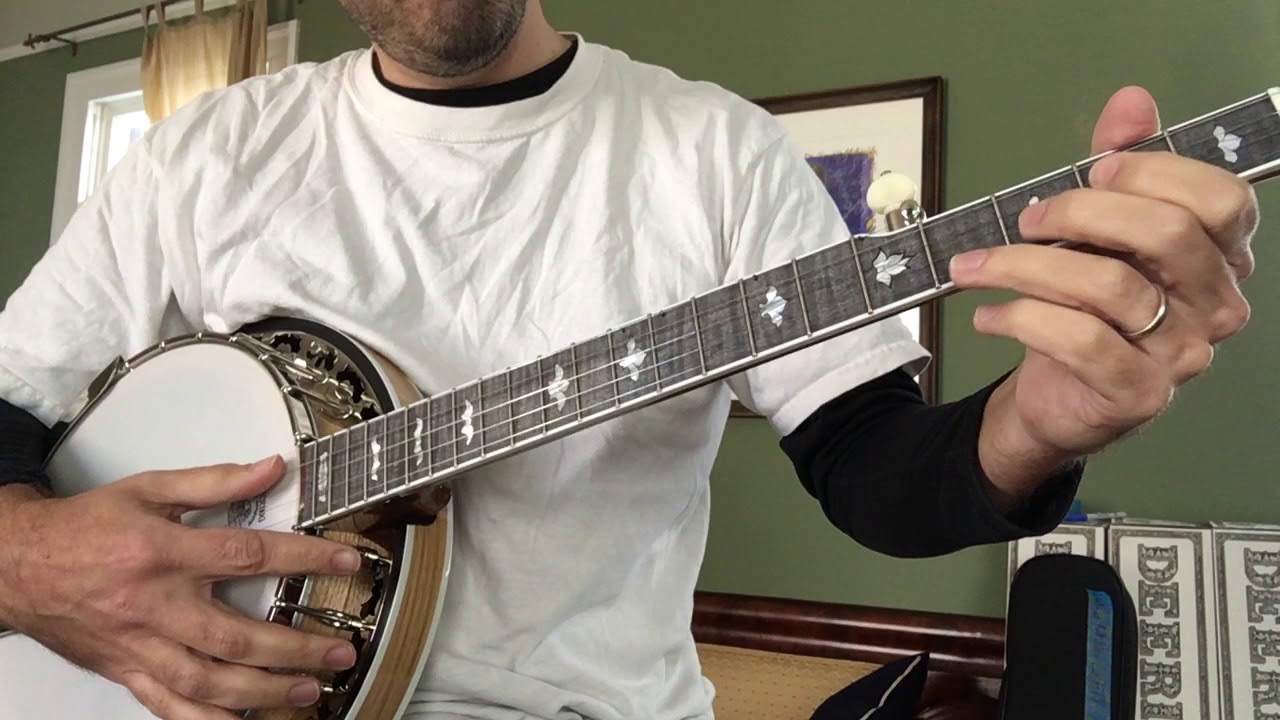
Standard 5-string banjo tuning is G-D-G-B-D. That is banjo chords g tuning at its core . The fifth string is a high G. It sits above the other four. That string changes everything.
Read Also: Megan Moroney Cuts Denver Concert Short Due to Sudden Illness
Most chord books show you shapes that include the fifth string. That is a mistake. The fifth string rings constantly. You cannot fret it. When you play a C chord, that high G clashes if you are not careful.
The first thing I learned to do was ignore the fifth string mentally. I learned shapes that work without it. Then I learned when to let it ring.
The D Shape That Opens Everything
Everyone learns G. G is easy. You strum open strings. Done.
The D chord is where beginners struggle. The standard D shape involves fretting three strings and leaving the first string open. But the fifth string rings that high G again. It creates a Dsus4 sound. Not quite right.
The fix is a movable shape. Play D at the fifth fret using the same shape as your C chord. Move it up two frets. You get D. No open strings. No clash.
This shape unlocks every key. Once I learned it, I stopped hunting for individual chord diagrams. I started moving shapes.
The E Minor Chord That Changes Songs
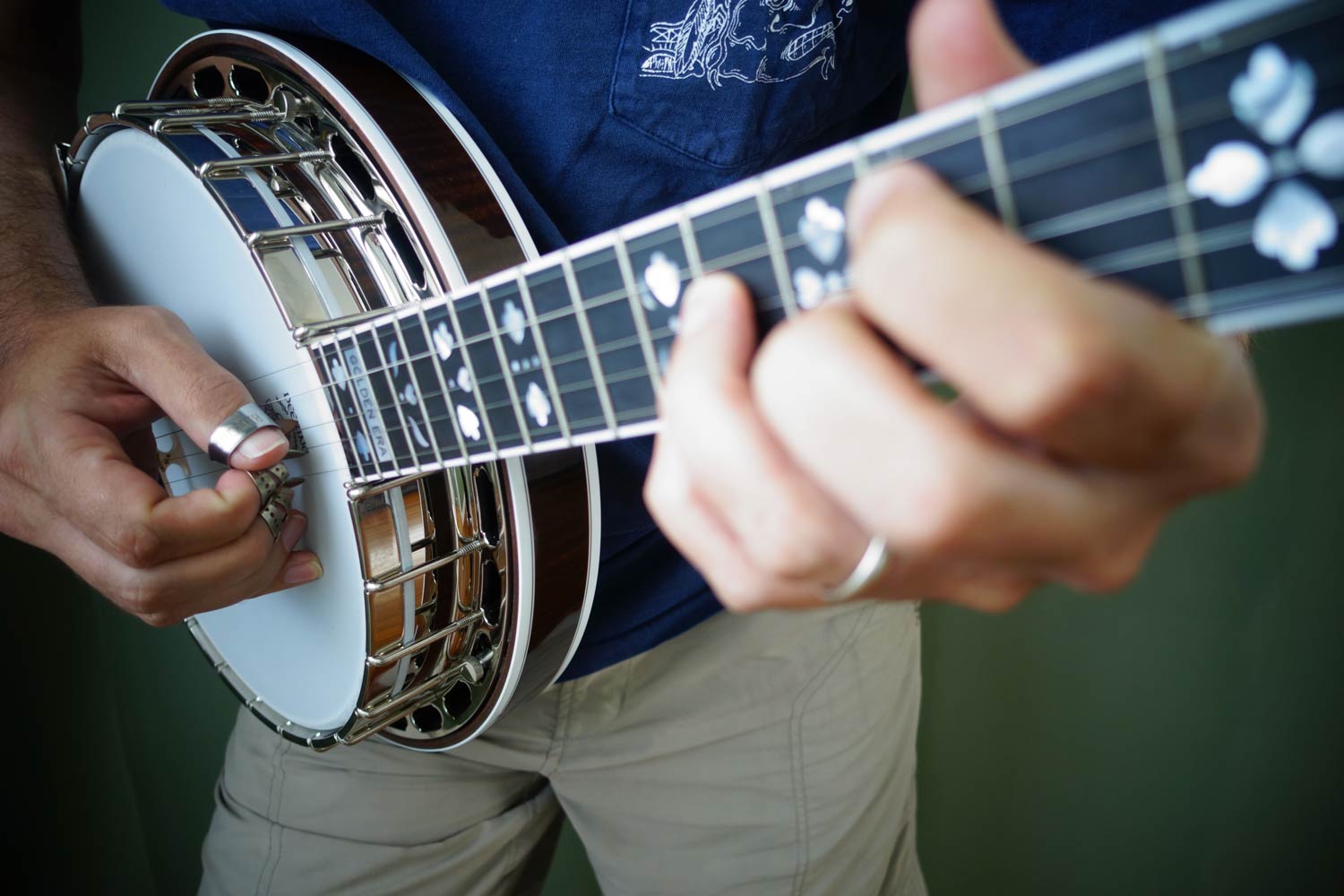
Most beginner books stop at G, C, and D7 . That is not enough. Songs in G need E minor. Songs in C need A minor. The E minor chord is your first real challenge. It requires fretting three strings across four frets. It feels awkward. Your fingers cramp.
But here is the trick. You do not need the full shape. Play a simplified version. Frett the second fret of the fourth string. Frett the second fret of the third string. Let the others ring open. That gives you an Em7. Close enough for most backup playing.
I learned this from a session player at a festival. He said nobody plays full chords when backing up a fiddle. They play partial shapes. The melody carries the rest.
The F Chord Nobody Teaches
F is the chord that makes guitarists complain. It is not easier on banjo. But you rarely need it.
You Must Also Like: Is Guitar String Buzz Ruining Your Tone? Here’s the Fix
Songs in G use F as a passing chord. You hit it for two beats. Then you move on. You do not need a perfect F.
The easiest F shape is a partial barre. Barre the first fret of the second and third strings. Frett the second fret of the fourth string. That gives you a usable F. It is not perfect. It works.
The banjo is a rhythm instrument. Nobody notices a slightly muted F in a jam. They notice if you stop playing.
The Chord Shapes That Move Up the Neck
This is the secret that transformed my playing. Chord shapes repeat. A shape you learn for C works for D if you move it up two frets. The three essential movable shapes are:
The G shape. Root on the third string. Move it up five frets. You get C.
The C shape. Root on the second string. Move it up two frets. You get D.
The D shape. Root on the first string. Move it down two frets from D. You get C.
Learn these three shapes. Learn where the root note sits in each one. Then you can play any chord anywhere on the neck .
I spent six months memorizing individual chord diagrams. I could have spent two weeks learning these three shapes instead.
The 7th Chords That Add Color
Basic triads sound plain. 7th chords add movement. They pull the song forward.
The D7 chord is the most common. You use it to resolve back to G. The open D7 shape is simple. Three fingers. Easy.
The G7 chord is less common in bluegrass. But it shows up in folk and old-time music. The shape is similar to D7. Shift it around.
The C7 chord is rare. But when you need it, you need it. The movable shape system handles this too. Take your C shape. Add a flat 7. Move it where you need it.
The Minor Chords That Make Songs Sound Right
Major chords are happy. Minor chords are sad. Songs need both.
I already mentioned E minor. A minor is the other essential minor chord. Songs in C use A minor constantly.
The A minor shape is simple. Frett the second fret of the fourth string. Frett the second fret of the third string. Frett the first fret of the second string. Let the first and fifth strings ring.
That shape moves too. Move it up two frets. You get B minor. Move it up two more. You get C# minor. The pattern holds.
The Suspended Chords Nobody Mentions
Suspended chords are the secret weapon of backup playing. They create tension. They resolve. They make simple songs sound interesting.
The most common suspended chord is Dsus4. Play a D shape. Add your pinky to the third fret of the first string. That is Dsus4. Lift the pinky. Back to D.
You can suspend any chord this way. The pattern is simple. Find the major third. Raise it one fret.
I use suspended chords constantly now. They fill space between vocal lines. They add texture without adding notes.
How to Practice These Chords?
Do not practice chords in isolation. That is boring. You will quit.
Practice chord progressions. Take a simple song. “Will the Circle Be Unbroken.” Play it with the chords you know. Then add one new chord. Play it again.
The progression G-C-D7-G is the foundation. Every bluegrass song uses it. Master that progression. Then add E minor. Then add A minor. Then add the 7th chords.
Speed comes later. Accuracy comes first. Play slowly. Hear the chord changes. Feel where your fingers go.
The Resources That Actually Help
Most chord books are reference manuals. You look up a chord. You move on. They do not teach you how to use chords.
The Banjo G Tuning Photo Chord Book by William Bay shows left-hand fingering photos and diagrams for all basic chords in G tuning . It arranges sections alphabetically by root . That is useful as a reference. But it does not teach movement.
New Techniques for 5 String Banjo Volume 2 by Jeff Belding goes further . It introduces chords beyond G, C, and D7. It teaches you to move chord shapes up the neck. It shows how to build a solo . This is the book that taught me movable shapes.
The Complete Bluegrass Banjo Method covers chord background styles and up-the-neck playing . It assumes you know basic chords. It shows you how to use them.
The Final Thoughts
The 5 string banjo chords that matter are not the ones in beginner books. They are the movable shapes. The partial chords. The suspended notes that add color.
Learn G, C, and D7 first. That is unavoidable. Then learn the E minor shape. Then learn the movable shapes. Then learn suspended chords.
The chords for banjo 5 string are a system. Not a list. Once you see the patterns, you stop memorizing. You start playing.