I spent my first month with a guitar staring at tabs like they were encrypted messages. The numbers made sense. The lines didn't. Then a friend grabbed my guitar, pointed at the sixth line from the top, and said "that's your thickest string, not your thinnest."
That one correction unlocked everything. If you're searching for how to read guitar tabs, you're probably stuck on the same upside-down logic that trips up almost every beginner.
This guide skips the theory lecture and gives you the practical map, based on real mistakes I made and the fixes that actually stuck.
The Six Lines That Confuse Everyone
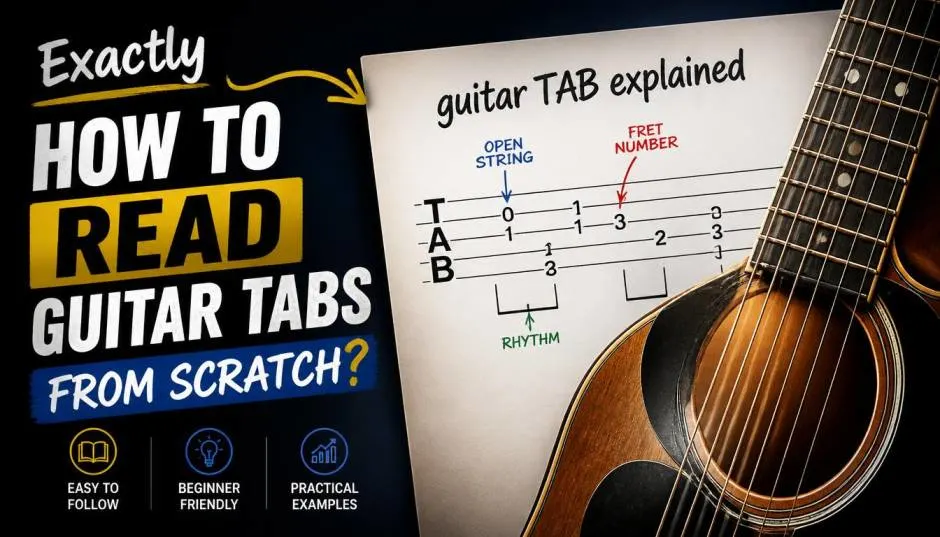
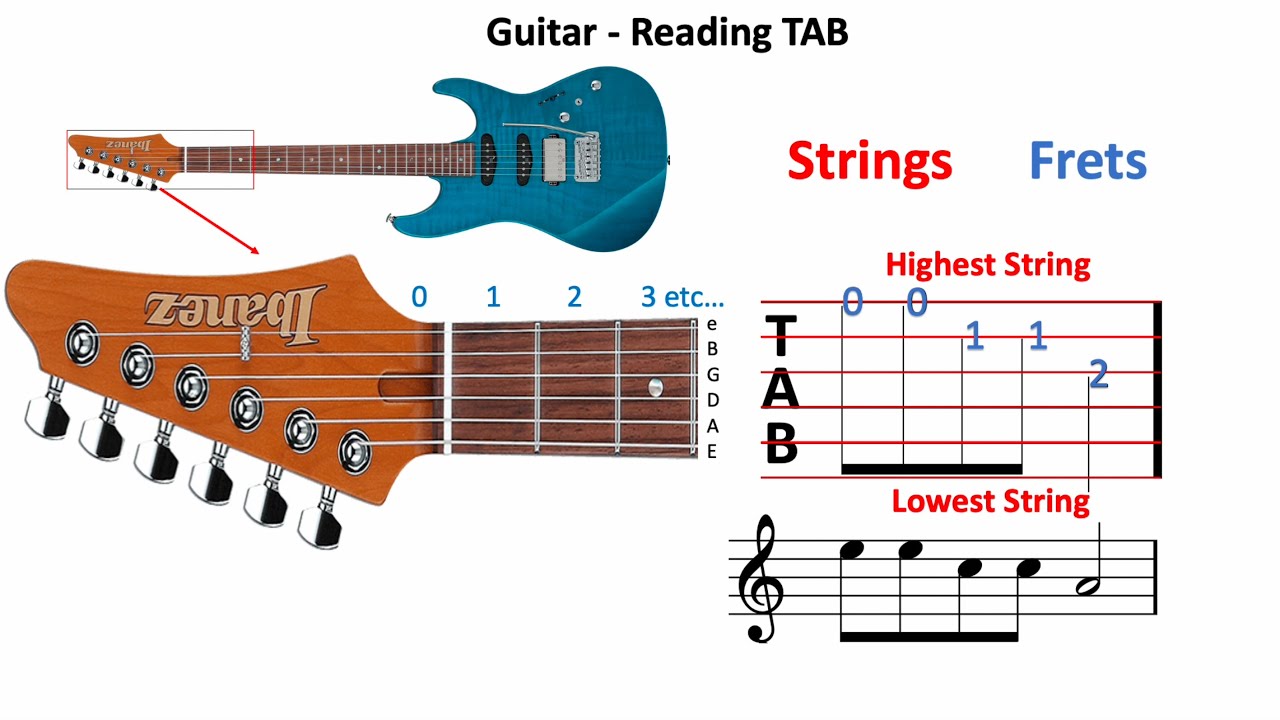
Guitar tabs use six horizontal lines. Each line represents one string. Here's the part that breaks your brain: the top line is your thinnest string (high E). The bottom line is your thickest string (low E).
Read Also: Cigar Box Guitar Kit: How to Build and Play It at Home?
Why does it feel backward? Because when you look down at your guitar, the thick string sits closest to your face. Tabs flip that perspective. Once you accept this upside-down rule, the rest clicks fast.
Numbers sit on these lines. A number tells you which fret to press on that specific string. A "0" means play the string open—no fingers on the fretboard.
So if you see a "3" on the second line from the top, you press the third fret of your B string. That's it. No hidden code.
Your First Real Tab (Read It Left to Right)
Tabs work like reading a sentence. You move from left to right. The order of numbers tells you the order of notes. Here's a simple exercise. Try this on your high E string:
text
e|--0--1--3--5--|
B|---------------|
G|---------------|
D|---------------|
A|---------------|
E|---------------|
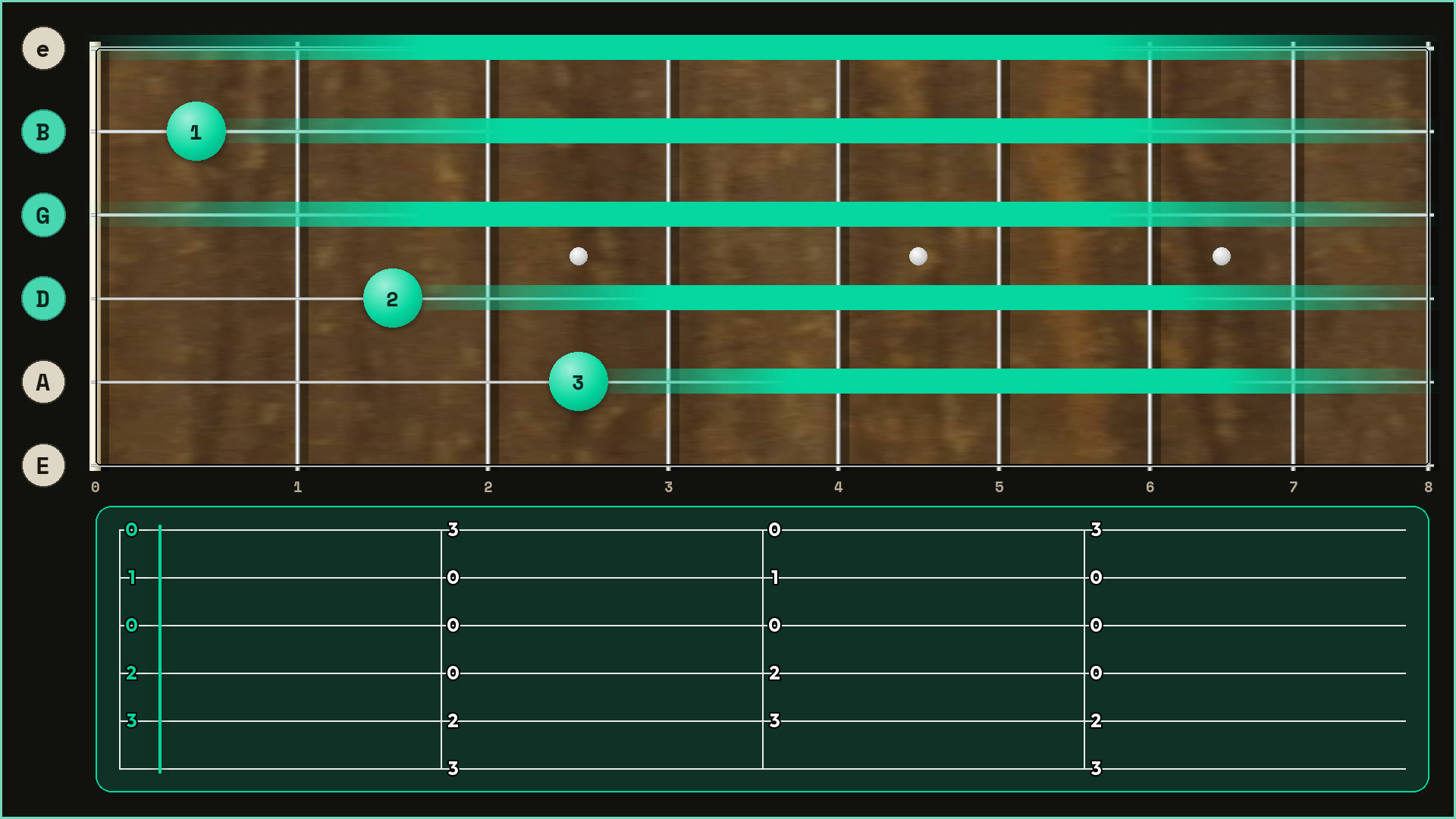
Play the open high E. Then the first fret. Then the third. Then the fifth. Each number appears after the last one. You play them one at a time. Now look at this:
text
e|--0--|
B|--1--|
G|--0--|
D|--2--|
A|--3--|
E|-----|
The numbers stack vertically. That means you play them together. This is a C major chord . Strum all five notes at once. That's the whole foundation. Single numbers go in order. Stacked numbers go together.
The Symbols That Make Tabs Look Scary
Once you understand the lines and numbers, tabs throw letters and squiggles at you. These aren't random. Each one tells you how to shape the note.
You Must Also Like: Easy Songs to Learn on Guitar for Beginners: Your Complete Guide
h (hammer-on): You play a note, then slam another finger onto a higher fret without picking again. The tab "5h7" means play fret five, then hammer onto fret seven.
p (pull-off): The reverse. You play a higher note, then pull your finger off to let a lower fret ring. "7p5" means play seven, pull off to five.
b (bend): You push the string sideways to raise the pitch. "7b9" means play fret seven and bend until it sounds like fret nine . This one takes practice. Your fingers will hurt before it sounds right.
/ and \ (slides): You play a note and slide your finger to another fret without lifting. "/" slides up. "" slides down. "5/7" means play five and slide to seven.
x (mute): You touch the string without pressing it down. You get a percussive thud, not a note. This shows up everywhere in rock riffs.
You don't need to memorize all of these today. Learn hammer-ons and slides first. They show up in almost every song you'll want to play.
The Rhythm Problem (And How to Fix It)
Here's the dirty secret about tabs: they don't tell you timing. A tab shows you where to put your fingers. It doesn't show you how long to hold each note.
This is why beginners play a song and it sounds nothing like the recording. The notes are right. The rhythm is wrong. The fix is embarrassingly simple: listen to the song.
Play the tab while the track runs. Your ear handles the timing. The tab handles the fingering. Some tabs include rhythm markers. You'll see lines, dashes, or count numbers above the tab.
These help, but they're not standard. Most free tabs online skip rhythm entirely.
My rule: never learn a song from a tab alone. Pull up the track on your phone. Play along. Your brain will connect the dots faster than any notation system can teach you.
When to Graduate to Sheet Music?
Tabs get you playing songs in days. But they have a ceiling. They don't teach you why notes work together. They don't show you the shape of a melody. They don't help you improvise.
If you want to write your own music or understand what you're playing, sheet music fills that gap. It shows pitch and rhythm together. It teaches you the language, not just the finger positions.
You don't have to choose one or the other. Most guitarists use both. Tabs for quick learning. Sheet music for deeper understanding.
Start with tabs. Get some songs under your fingers. Then, when you're curious about the "why," pick up a basic sheet music guide. You'll be surprised how much faster it makes sense once you've already played the notes.
The Final Thoughts
Stop overthinking the upside-down string thing. Just accept it. Top line is thin. Move on. Play along with recordings from day one. The rhythm will sort itself out. Tabs without audio are like a map without street names.
And don't wait until you "understand everything" to start playing. I spent two weeks reading about hammer-ons before I tried one. The first attempt sounded terrible.
The tenth attempt sounded like music. Reading about it didn't help. Doing it did.
You already have everything you need to start. Six lines. Some numbers. A song you want to learn. Open a tab, pull up the track, and play the first line. That's how everyone starts.