Hotone guitar pedals have a reputation problem. Walk into any guitar forum and you will hear two things. First, the Ampero sounds shockingly good for the price. Second, the company barely answers support tickets.
I borrowed an Ampero II Stomp from a friend for two weeks. I also tested the Ampero II Stage at a local shop. Both units impressed me. Neither one made me want to sell my pedals and commit fully. That is the honest tension you need to understand before spending $500 or more.
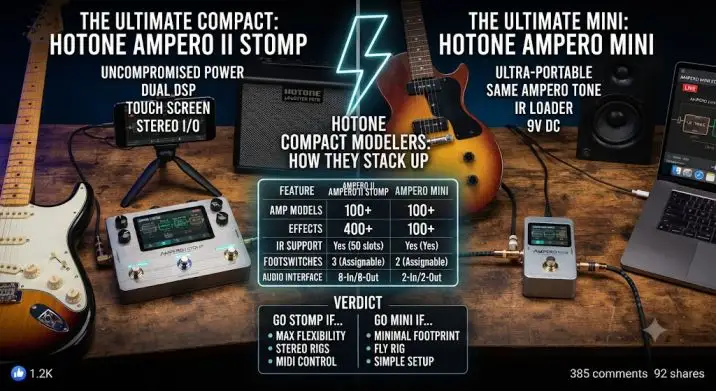
The Ampero II Stomp is the compact one. The Stage is the bigger floorboard. They share the same brain but target different players. I will break down what each does well, what it fumbles, and who should actually buy one.
What Is the Best Hotone Guitar Pedals 2026?
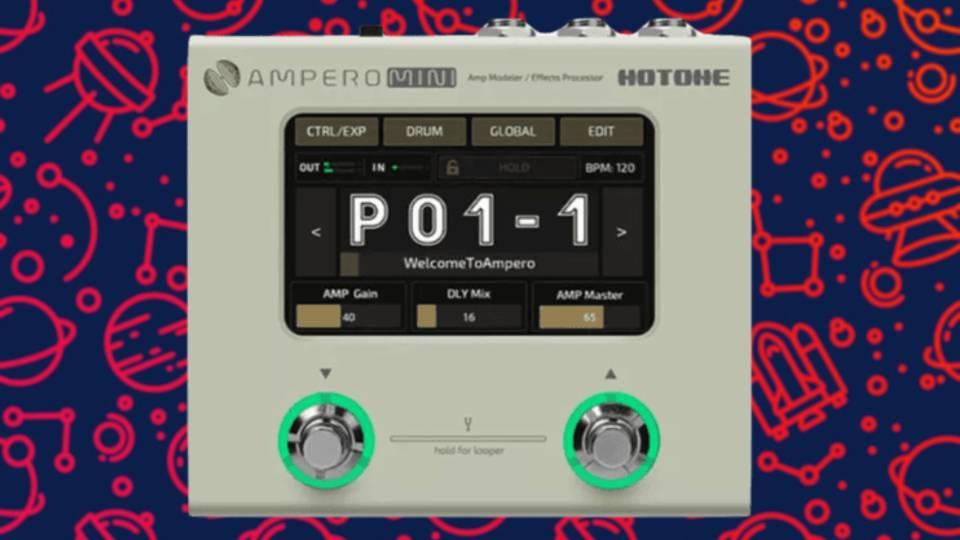
The Stomp fits on a pedalboard. That is its whole pitch. It measures small enough to sit next to your drive pedals and tuner. It has a 4-inch touchscreen and four footswitches. The screen is sharp. I had no trouble reading it under dim stage lights.
Read Also: Is Guitar String Buzz Ruining Your Tone? Here’s the Fix
The sound engine is the same CDCM HD and F.I.R.E. modeling system used across the Ampero II line. It includes over 80 amp models, 68 cab models, and a dual effect chain that lets you run parallel signal paths.
For a bass player, that parallel routing is a genuine advantage. You can keep your clean low end on one path and distort the mids on another. Most compact modelers cannot do this.
I plugged my Precision Bass into the Stomp and ran it into a studio monitor. The Ampeg-style models felt warm and responsive. The SVT grit was there when I pushed the gain. I did not need to fight the EQ to get a usable tone.
The Effect Loop Problem Nobody Mentions
Here is the thing that stopped me from buying one. The Stomp's effect loop is mono. If you run stereo effects in the loop, you cannot keep the signal stereo.
For guitar players running mono pedals, this does not matter. For anyone building a stereo rig, it is a dealbreaker.
The Stage fixes this. The Stomp does not. That is the single biggest practical difference between the two units, and Hotone does not shout about it in the marketing.
Who the Stomp Is For?
Buy the Stomp if you play bass and need parallel routing in a tiny footprint. Buy it if you want a backup rig that fits in a gig bag. Buy it if you are a guitarist who runs mono pedals in front and does not care about stereo effects loops.
Skip it if you need stereo effects loops. Skip it if you rely on an expression pedal. The Stomp does not include one. You have to add your own.
The Ampero II Stage: Bigger, Better, Still Has Holes
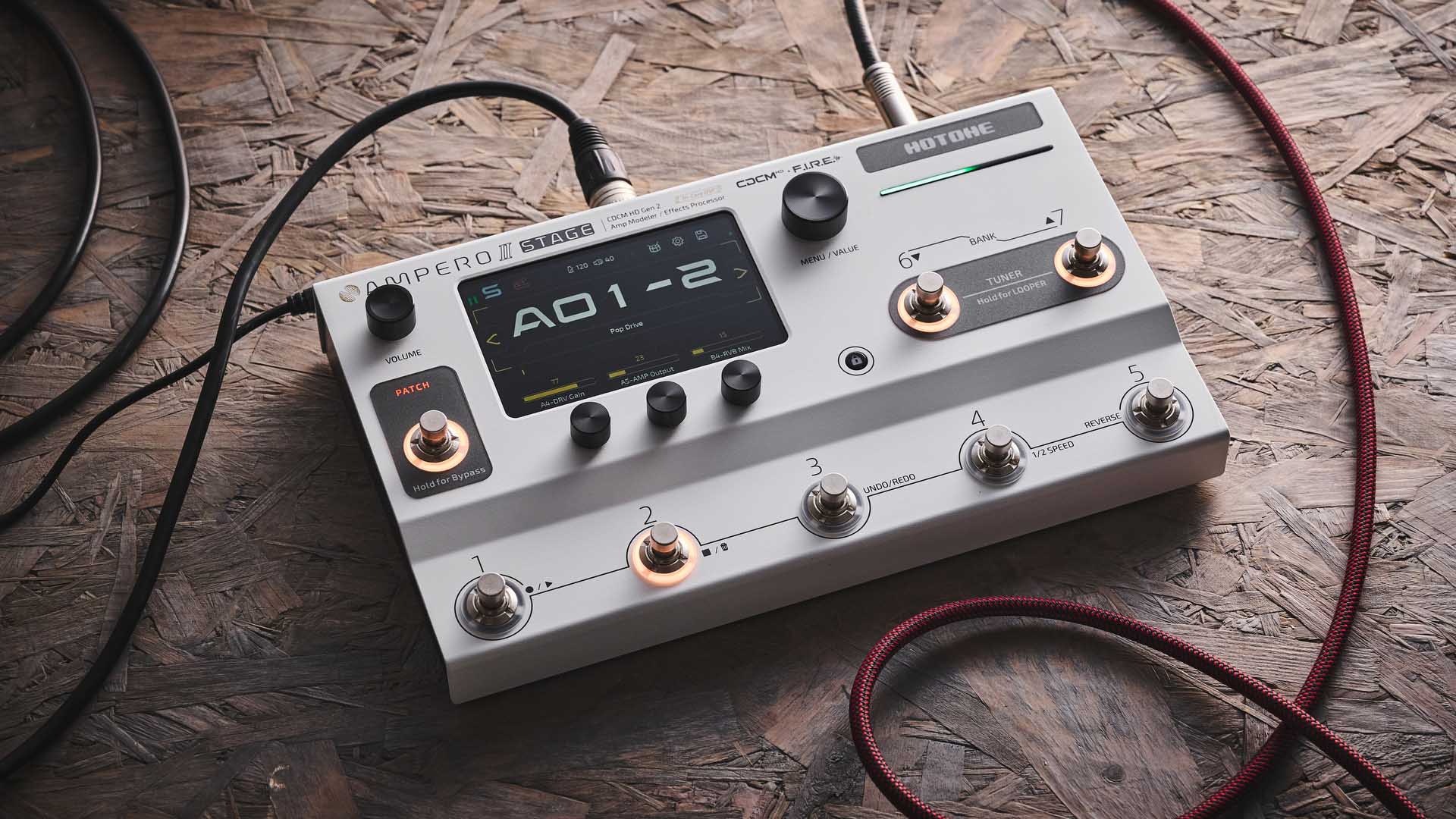
The Stage is the flagship floorboard. It has eight footswitches, a 5-inch touchscreen, and three mini rotary encoders below the screen . The extra encoders make editing faster.
You Must Also Like: Easy Guitar Chords Songs: 8 Simple Songs for Beginners
I adjusted amp settings without drilling into menus. That sounds small. In practice, it changes how you use the device.
The Stage includes a microphone preamp with phantom power. You can plug a condenser mic into input R and run vocal effects through the same unit. For solo performers or worship players who sing and play, this is a real feature. The Stomp does not have it.
The effects library is larger. Hotone claims over 460 effects, 90+ amp models, and 100+ pedal models . The Stage also supports NAM captures, which the Stomp gained later through firmware. That means you can load profiles of real amps captured by other users.
The DSP Wall Is Real
The Stage has a processing ceiling. One Thomann reviewer tested the capture feature and found it consumed up to 70% of the available DSP . That left room for only a few effects. They could not add reverb to a captured amp preset.
For players who rely on captures, this is a serious constraint. The unit was not designed with captures in mind. Hotone added the feature later. It works. It also exposes the hardware limits.
The Support Problem Is Not a Rumor
I checked the Hotone community forum. Users report bugs. Users request features. Hotone staff do not respond. One Thomann reviewer put it plainly: support is absent, multiple attempts to report issues went unanswered, and the community is mostly Chinese-speaking with no official engagement.
This matters for a device that depends on firmware updates. Hotone does release updates. The Ampero II received scenes, new amps, and capture support over time. But when something breaks, you are largely on your own.
The Head-to-Head That Actually Matters
| Feature | Ampero II Stomp | Ampero II Stage |
|---|---|---|
| Footswitches | 4 | 8 |
| Screen | 4-inch | 5-inch |
| Expression pedal | No | No |
| Stereo FX loop | No (mono) | Yes |
| Mic preamp | No | Yes (with phantom power) |
| NAM capture support | Yes (via firmware) | Yes |
| DSP headroom for captures | Limited | Limited (70% consumed) |
| Price (approx) | $400-450 | $559 |
The Stage costs more. It gives you stereo loops, more switches, and a mic input. The Stomp gives you portability. Neither one includes an expression pedal. That is a strange omission for units marketed at live players.
The Comparison People Make (And Why It Is Unfair)?
Reviewers compare the Ampero II to the Line 6 Helix. One French user who owns both said he found no meaningful difference in sound, and the Hotone felt more natural. I cannot verify that claim. I have not A/B tested them side by side.
What I can say is that the Ampero II does not sound like a budget modeler. The amps respond to picking dynamics. The cleans have headroom. The high-gain patches do not fizz out immediately.
But the Helix has years of community support, frequent updates, and a company that answers emails. Hotone has good hardware and weak software support. That trade-off is the real decision.
The Final Thoughts
If you need a compact modeler for bass with parallel routing and you do not care about stereo effects loops, buy the Stomp. It does things most pedals in its size class cannot do.
If you need stereo loops, a mic input, and more footswitches for live use, buy the Stage. It is the more complete device. Just know that the DSP ceiling will frustrate you if you lean heavily on captures.
If you need reliable customer support and a thriving community, look elsewhere. Hotone makes good-sounding gear. They do not make it easy to get help when something goes wrong.
The Hotone guitar pedals line, specifically the Ampero II family, sits in an awkward spot. It sounds better than its price suggests. It also asks you to accept limitations that more established brands have already solved. That is not a reason to avoid it. It is a reason to buy it with your eyes open.